
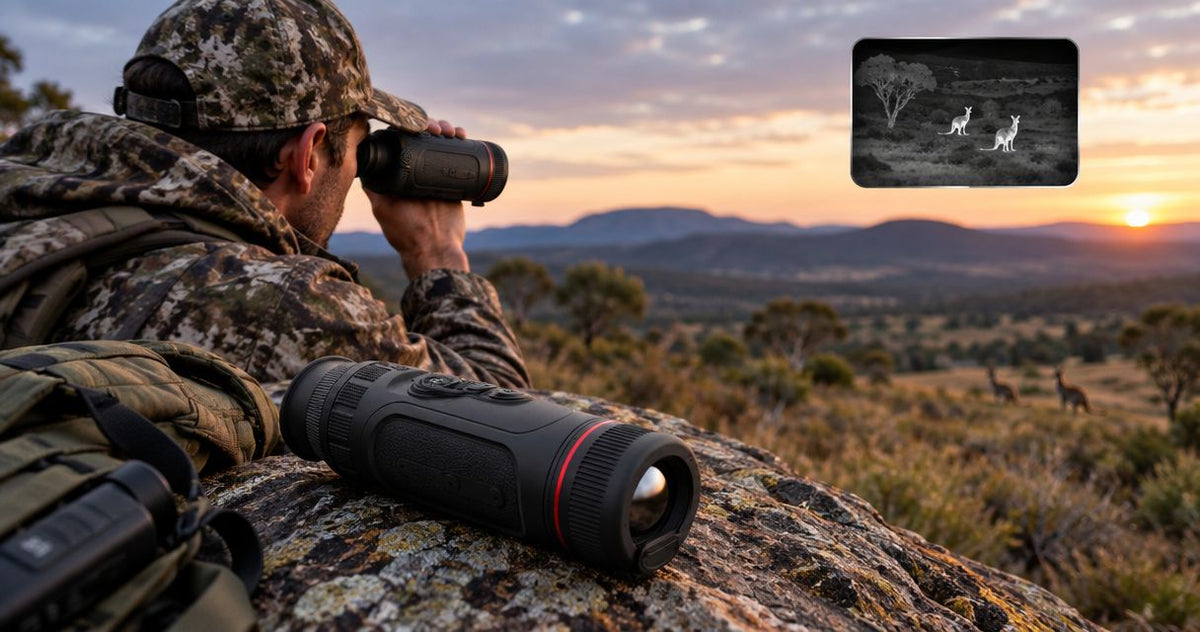
Best overall: NOCPIX Bolt H50R. Best for a supplied quick-detach mount: GUIDE TU650P 3.0. Best for a lightweight tube format: PARD Pantera 256 Mini. This 2026 guide compares eight thermal riflescopes for Australian hunters, with Goingdark as the retailer reference.
- Best thermal scopes Australia: NOCPIX Bolt H50R is the default pick for hunters wanting 640×512 resolution and laser ranging.
- GUIDE TU650P 3.0 suits buyers who specifically want a supplied quick-detach mount with their thermal riflescope.
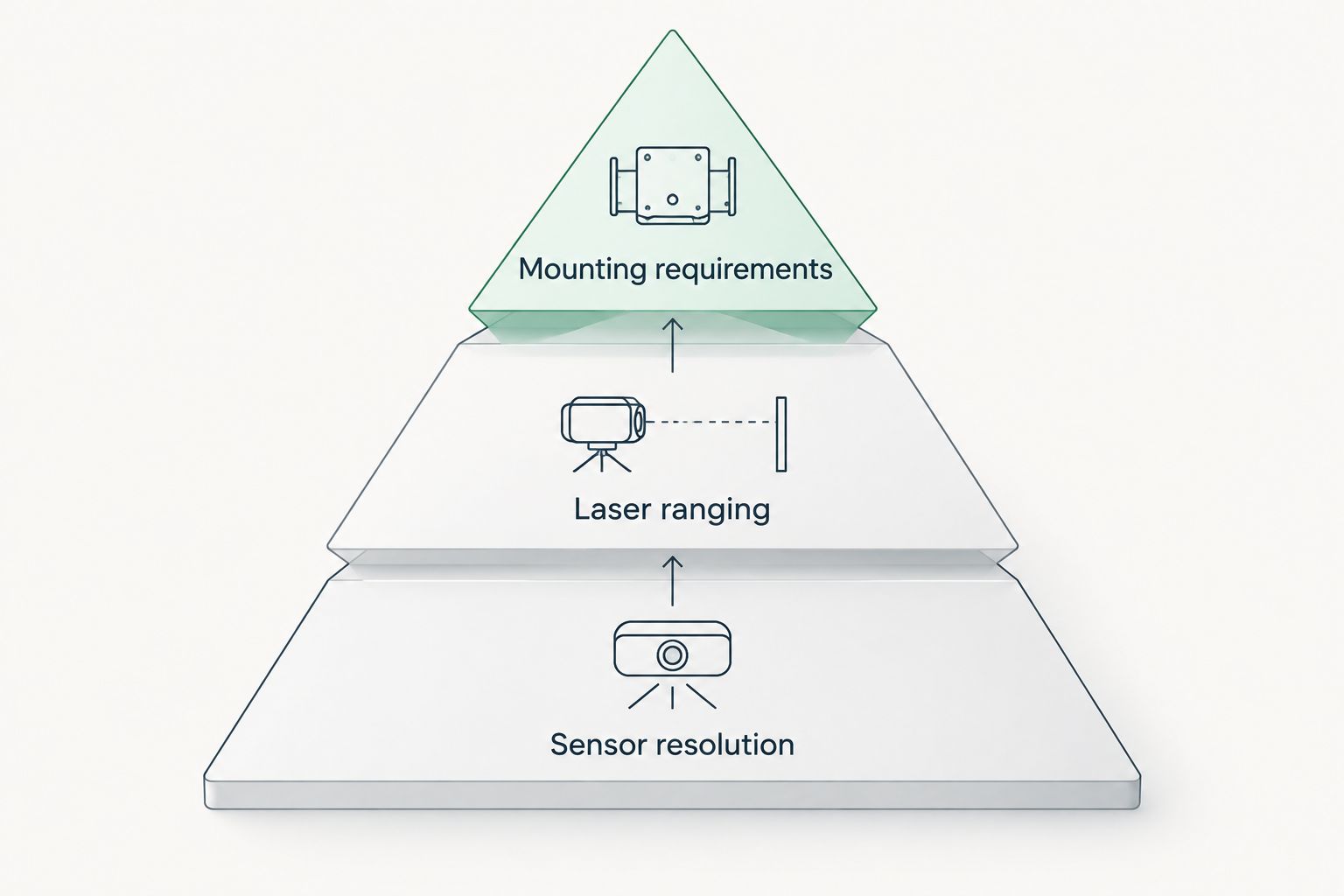
- Compare thermal scopes by sensor resolution, ranging and mounting requirements; keep digital night vision and handheld monoculars separate.
Why this matters
A thermal riflescope, handheld thermal monocular and digital night vision scope do different jobs. Thermal equipment detects infrared radiation; digital night vision forms an image from light, including infrared illumination. A handheld spotter is not a substitute for a rifle-mounted aiming optic.
This 2026 shortlist contains eight thermal riflescopes, not a padded ten. Digital night vision scopes, monoculars and accessories are excluded. Choose the device type first, then compare the features that affect your setup.
What makes the best thermal scope?
Use these criteria to assess a 2026 shortlist before choosing a model:
- Sensor resolution: Compare native pixel dimensions, not display resolution or digital zoom. More sensor pixels do not settle every image-quality question.
- Laser ranging: An integrated laser rangefinder adds distance measurement. It does not establish target identity or make a shot safe.
- Mounting requirements: Check the mount, rifle interface, eye relief and clearance together. An included mount still needs to suit your rifle.
- Format: A compact or lightweight scope matters when you carry your rifle; assess handling alongside image detail.
- Field usability: Check controls, battery arrangements and zeroing instructions before committing. These matter beyond the specification headline.
Thermal scopes at a glance
The order below gives each scope a separate buying role. It is not a claim that every higher-ranked model outperforms every lower-ranked model in all conditions.
| Thermal scope | Best for | Standout feature | Key limitation or check |
|---|---|---|---|
| NOCPIX Bolt H50R | Default choice with ranging | 640×512 sensor; 1,200 m laser rangefinder | Ranging capability is not identification distance |
| GUIDE TU650P 3.0 | Supplied quick-detach mount | 640×512 sensor, LRF and included QD mount | Confirm mount compatibility |
| GUIDE TU650LS | Higher-resolution APEX VISION option | 640×512 thermal scope with LRF | Resolution alone does not prove field performance |
| GUIDE TU435LS | 400×300 scope with ranging | APEX VISION and LRF | Fewer native pixels than 640×512 options |
| GUIDE TU425S | APEX VISION entry point | Compact 400×300 thermal scope | Fewer native pixels than 640×512 options |
| HIKMICRO NEOS NH25L | 320×240 option with ranging | Compact thermal scope with LRF | Lower native resolution than 400×300 options |
| PARD Pantera 256 Mini | Lightweight tube format | Compact thermal scope with 25 mm lens | Handling advantages do not establish image-detail superiority |
| HIKMICRO NEOS NE25 | Compact 256×192 option | Compact thermal scope format | Lower native resolution than the other specified sensors |
1. NOCPIX Bolt H50R: best thermal scope for an all-round shortlist
The NOCPIX Bolt H50R combines a 640×512 thermal sensor with a built-in 1,200 m laser rangefinder. That makes it the clearest default recommendation here for hunters who want both higher native resolution and integrated distance measurement.
NOCPIX Bolt H50R pros:
- Specified 640×512 sensor.
- Integrated laser ranging.
- Both core features in one riflescope.
NOCPIX Bolt H50R cons:
- Rangefinder reach does not establish identification distance.
- Sensor dimensions alone do not establish image quality in your conditions.
Best for: Hunters wanting resolution and ranging together. Verdict: Buy as the default shortlist choice, after checking rifle compatibility.
2. GUIDE TU650P 3.0: best thermal scope for an included QD mount
The GUIDE TU650P 3.0 combines a 640×512 sensor, laser ranging and an included quick-detach mount. Its distinct advantage in this comparison is the explicitly supplied mount, rather than an assumed difference in image performance.
GUIDE TU650P 3.0 pros:
- Specified 640×512 sensor.
- LRF-equipped riflescope.
- QD mount included.
GUIDE TU650P 3.0 cons:
- An included mount does not guarantee rifle compatibility.
- Quick-detach hardware does not remove the need to verify zero after refitting.
Best for: Buyers prioritising the supplied mounting arrangement. Verdict: Buy if the included QD mount suits your rifle.
3. GUIDE TU650LS: best thermal scope for higher-resolution APEX VISION
The GUIDE TU650LS is a 640×512 LRF thermal riflescope built around APEX VISION. It gives you a higher-resolution option within the same named imaging system used by the TU435LS and TU425S.
GUIDE TU650LS pros:
- Specified 640×512 sensor.
- Integrated laser rangefinder.
- APEX VISION imaging system.
GUIDE TU650LS cons:
- More sensor pixels do not independently prove better identification.
- The imaging-system name does not settle mounting or handling requirements.
Best for: Buyers specifically comparing higher-resolution APEX VISION riflescopes. Verdict: Buy for that combination; do not choose on the system name alone.
4. GUIDE TU435LS: best thermal scope for 400×300 with ranging
The GUIDE TU435LS combines a 400×300 sensor, laser ranging and APEX VISION. Its buying role is straightforward: a specified 400×300 scope with integrated distance measurement.
GUIDE TU435LS pros:
- Specified native sensor dimensions.
- Integrated laser rangefinder.
- APEX VISION imaging system.
GUIDE TU435LS cons:
- Fewer native pixels than the listed 640×512 scopes.
- Ranging does not compensate for insufficient target detail.
Best for: Hunters choosing a 400×300 LRF configuration. Verdict: Buy if its image detail meets your identification requirements.
5. GUIDE TU425S: best thermal scope for an APEX VISION entry point
The GUIDE TU425S is described as a compact entry point into APEX VISION and specifies a 400×300 sensor. Treat it as a separate setup choice, not as a substitute for the TU435LS's explicitly named ranging feature.
GUIDE TU425S pros:
- Compact scope format.
- Specified 400×300 sensor.
- APEX VISION imaging system.
GUIDE TU425S cons:
- Fewer native pixels than the 640×512 options.
- Compactness alone does not establish rifle balance or fit.
Best for: Buyers prioritising a compact APEX VISION entry model. Verdict: Hold until you confirm it covers your required features.
6. HIKMICRO NEOS NH25L: best thermal scope for 320×240 with LRF
The HIKMICRO NEOS NH25L combines a 320×240 sensor with laser ranging in the compact NEOS scope range. It fills a distinct role below the listed 400×300 and 640×512 sensor configurations.
HIKMICRO NEOS NH25L pros:
- Specified 320×240 sensor.
- LRF-equipped scope.
- Compact NEOS format.
HIKMICRO NEOS NH25L cons:
- Lower native resolution than the 400×300 options.
- Integrated ranging does not increase native sensor detail.
Best for: Buyers deliberately choosing a 320×240 LRF scope. Verdict: Hold until you assess target detail at your intended distances.
7. PARD Pantera 256 Mini: best thermal scope for lightweight tube handling
The PARD Pantera 256 Mini uses a compact, lightweight tube-scope format and a 25 mm lens. Its strongest documented distinction here is physical format, not a claim of superior identification performance.
PARD Pantera 256 Mini pros:
- Compact construction.
- Lightweight format.
- Familiar tube-scope layout.
PARD Pantera 256 Mini cons:
- A 25 mm lens specification alone does not establish field of view.
- Lightweight construction does not establish mounting compatibility.
Best for: Hunters who prioritise carrying and handling a tube-format scope. Verdict: Buy for the format after checking image detail and fit.
8. HIKMICRO NEOS NE25: best thermal scope for a compact 256×192 option
The HIKMICRO NEOS NE25 specifies a 256×192 sensor in a compact thermal scope. Choose it for that defined configuration, rather than expecting it to match the native detail of higher-resolution sensors.
HIKMICRO NEOS NE25 pros:
- Compact scope format.
- Explicit 256×192 sensor specification.
- Thermal rather than digital night vision imaging.
HIKMICRO NEOS NE25 cons:
- Lower native resolution than the other specified sensors here.
- Digital enlargement cannot add captured sensor pixels.
Best for: Buyers specifically seeking a compact 256×192 scope. Verdict: Hold until its target detail meets your needs.
How the ranking works
This 2026 ranking prioritises specified sensor resolution, integrated ranging and distinct setup requirements. Goingdark's thermal scope shortlist separates documented features from claims about identification distance, battery endurance or recoil compatibility.
Detection is not identification. A visible heat signature is not enough to establish species, a safe background or a suitable shot.
Which thermal scope should you choose?
NOCPIX Bolt H50R is the default thermal riflescope choice at Goingdark for hunters wanting a 640×512 sensor and integrated laser ranging. Choose the GUIDE TU650P 3.0 instead when the supplied QD mount is your deciding requirement.
For your 2026 purchase, confirm fit, zeroing procedures and usable target detail before choosing. Goingdark sells thermal and night vision optics; make sure your shortlist stays within the device category you actually need.


FAQ
What's the best thermal scope in Australia for an all-round shortlist?
NOCPIX Bolt H50R is the default choice in this shortlist because it combines a 640×512 sensor with integrated laser ranging. Confirm mounting compatibility and suitable target detail before buying.
Which thermal scope includes a quick-detach mount?
GUIDE TU650P 3.0 explicitly includes a QD mount. Check that the supplied mount suits your rifle and verify zero after installation or refitting.
Is a 640×512 thermal scope always better than a 400×300 model?
No; a 640×512 sensor has more native pixels, but resolution alone does not settle overall image quality. Optics, processing and field conditions also affect the image you use.
Do I need a laser rangefinder on a thermal scope?
Choose an LRF-equipped scope when integrated distance measurement is a requirement. A range reading does not identify the target or establish a safe shot.
Is digital night vision the same as thermal imaging?
No; digital night vision forms an image from light, while thermal imaging detects infrared radiation. Compare the technologies separately rather than treating them as interchangeable.
Can I use a thermal monocular instead of a riflescope?
A handheld thermal monocular is for observation, not a substitute for a rifle-mounted aiming optic. Keep spotting and aiming requirements separate when choosing equipment.
One last thing
Make a heat signature your starting point, never your shooting decision. Before using any thermal riflescope, establish target identity, a safe background, landholder permission and the rules applicable to your location. No sensor resolution or rangefinder replaces those checks.
Share:
4 Tips for Choosing a Scope