
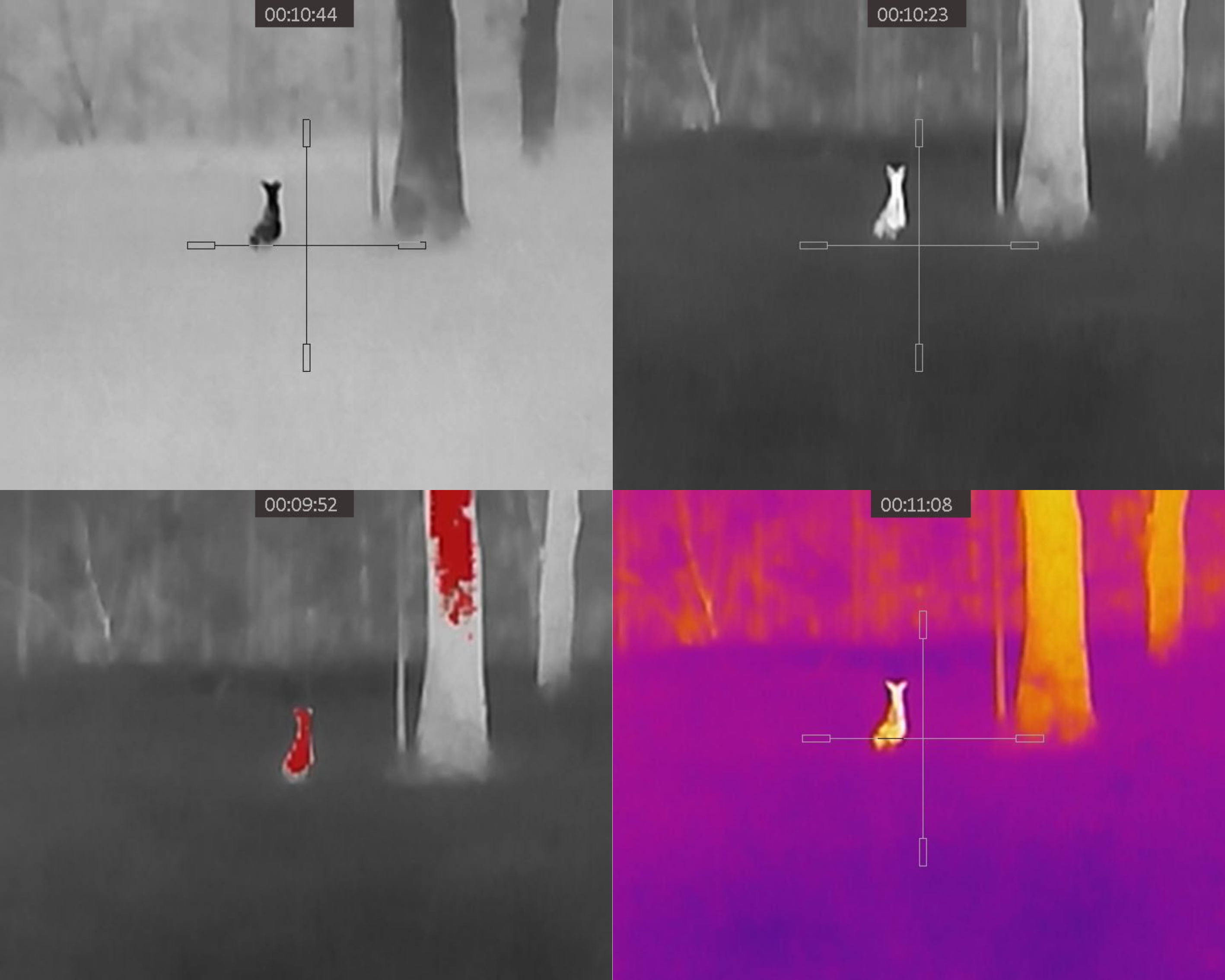
Today we're taking a look at colour palettes.
-
White-hot is the default palette for many. Hotter objects appear bright white against a darker, cooler background. (The image is like an old-style photo negative, if anyone else out there is old enough to remember before digital cameras.)
White-hot's good to spot an animal fast, especially in open terrain and clear conditions. -
Black Hot is the exact opposite of White Hot - the image is like a black and white photo.
It can be helpful when you want to see more detail of a target. In White Hot, sometimes everything's too bright and the detail blurs, but Black Hot fixes that issue. The detail makes it good for dense bush environments too.
Top tip - use Black Hot in high humidity - think fog or rain. Raise the contrast for even better results. -
Red Hot is like White Hot, but the warmest parts of the scene are shown in shades of red, orange and yellow. This makes animals pop out, so it's a good option for detection of targets.
-
Red Monochrome / Green Monochrome / Sepia are single colour palettes with variation in the intensity of that colour. They're all good options for long sessions, as the gentler colours mean less eye fatigue. Some people say Green Monochrome interferes less with your night vision for when you're not looking through a scope or monocular, but test a few options yourself and see what works for you.
By the way, Nocpix call their red option Crimson and their green Viridian, plus they offer a Violet. -
Rainbow / Ironbow / Multicolour: Forget the monochrome, let's go full colour! Gradation of colour all across the scene can make it easier to pick out small temperature differences. Helpful on warm nights when there's less thermal differentiation, or if you're trying to spot a blood trail. (Quick example, this lets me see my cat's footprints on the wooden floor after he's walked through the room.)
The power of personal preference
I just dumped a load of information on you, but remember, the most important thing is what you're comfortable with. I've seen two people test the same colour palette on the same scope - one of them loved it and the other hated it.
Which of these images do you feel most comfortable with?

-
Test different colour palettes - before you're trying to use them for real.
-
Test a few times, in different locations and weather conditions.
Pro Tips from Shaun:
-
Make sure you know how to change colour palette on your gear. Usually it's a quick click of a button. On some devices, you can program your favourites to come up quickly so you don't have to cycle through all options.
-
Remember to experiment with contrast and brightness too.
Share:
Do You Need LRF on a Thermal Scope? (A Practical Guide for Aussie Hunters)
Ever Used Your Thermal Gear In The Daytime?