

White hunting lights are the better choice when you need colour detail; dim red light suits close-up tasks where preserving dark adaptation matters. For red vs white hunting lights in 2026, choose by the job rather than assuming one colour wins everywhere. Red light still affects your vision, and neither colour guarantees that an animal will ignore the beam.
- Red vs white hunting lights: choose white for colour detail and dim red for close-up tasks between observations.
- GoingDark suits Australian hunters comparing hunting lights with night vision illuminators.
- Z-Vision HS-33 offers white, red and green light in a head-torch format.
- Infrared illumination serves compatible night vision equipment; it does not replace a visible light for unaided viewing.
Red or white hunting lights: which should you choose?
Choose white for visual detail, red for low-level task lighting, and a dual-colour unit when you need both. Before selecting a colour, settle whether you need a head torch, handheld light or fixed installation. The guide to choosing a handheld or vehicle-mounted hunting light covers that separate decision.
| Light option | Best for | Practical advantage | Main limitation |
|---|---|---|---|
| White light | Checking colour and visible surroundings | Reveals colour information that red illumination cannot reproduce faithfully | Bright exposure disrupts dark adaptation |
| Red light | Close-up tasks between observations | Dim red illumination generally interferes less with dark adaptation than bright white light | Changes colour appearance and still affects vision when bright |
| Red and white light | Hunters who need both task lighting and visual detail | Lets you select the appropriate colour for each job | You still need suitable brightness controls and beam coverage |
| Infrared light | Compatible digital night vision | Illuminates the scene for an infrared-sensitive camera | Does not provide useful illumination for your unaided eyes |
A light that reveals movement does not necessarily reveal enough detail to identify what you are looking at. Detection is not identification, regardless of beam colour or the distance printed in a specification sheet.
Why this matters
Your eyes, your light and your optic perform different jobs. A red beam changes what you see directly; an infrared illuminator supplies light to compatible night vision equipment; a thermal device forms an image from thermal radiation rather than reflected visible light.
For a 2026 purchase, start with the missing function in your kit. GoingDark sells hunting lights alongside thermal and night vision equipment, but those categories are not interchangeable. Buying another visible-light colour will not solve an infrared compatibility problem, and buying an infrared torch will not help you read equipment labels without a compatible viewing device.
White hunting lights: best for colour and visible detail
White light is the practical choice when the task depends on seeing colours. It lets you distinguish coloured markings, inspect equipment and assess the visible scene without the strong colour distortion of a red beam.
That does not make every white light suitable for every hunting job. A broad beam helps with nearby ground and equipment, while a concentrated beam places more illumination into a smaller area. Beam pattern matters as much as the colour label.
The trade-off is exposure. A bright beam shining onto nearby objects can leave your eyes less ready for darkness when you switch it off. Reflective equipment, pale surfaces and close vegetation can also return light towards you.
Choose white light when:
- You need to distinguish coloured labels, cables or equipment markings.
- You are checking ground, obstacles or equipment directly.
- You need visible scene detail rather than a coloured outline.
Do not treat a powerful white beam as permission to skip identification. If the detail remains unclear, the correct response is to stop and reassess, not assume that more brightness has settled the question.
Red hunting lights: best for dim close-up tasks
Red light earns its place as controlled task lighting, not as an invisible beam. At low brightness, red illumination generally preserves dark adaptation better than bright white illumination. That makes it useful for handling equipment between periods of observing in darkness.
Brightness still matters. A powerful red beam directed at a nearby surface is not equivalent to a dim red head torch used briefly. Compare the actual task and exposure rather than comparing colour names alone.
Red illumination also changes colour appearance. You cannot expect coloured markings or natural colour differences to look as they do under white light. Switch to white when colour is essential to the task.
Claims that red light never disturbs animals are not a sound buying basis. Animal vision differs between species, and an animal's response is not determined by wavelength alone. Do not buy red solely on a promise that wildlife cannot see it.
For your 2026 shortlist, prioritise useful low-output control and straightforward operation. A red setting that is too bright for your close-up work misses the reason for choosing red in the first place.
Why the result varies between hunting lights
Colour is only part of the comparison. These factors determine whether a light suits the job:
- Brightness control: Low output is useful for close tasks; excessive illumination can create glare and disrupt dark adaptation.
- Beam coverage: A broad beam covers nearby space, while a concentrated beam puts illumination into a narrower area.
- Mounting position: A head torch follows your head, while a fixed light follows its mounting direction.
- Colour requirements: White light supports colour discrimination; red light changes the appearance of coloured objects.
- Viewing equipment: Visible light serves unaided viewing, while infrared illumination needs a compatible viewing device.
- Controls: Switching colour or output should not require a sequence that interrupts the task you bought the light to perform.
Check these features separately. A product name identifying red and white modes does not establish its runtime, beam distance, weather rating or mounting compatibility.
How do you choose a practical lighting setup?
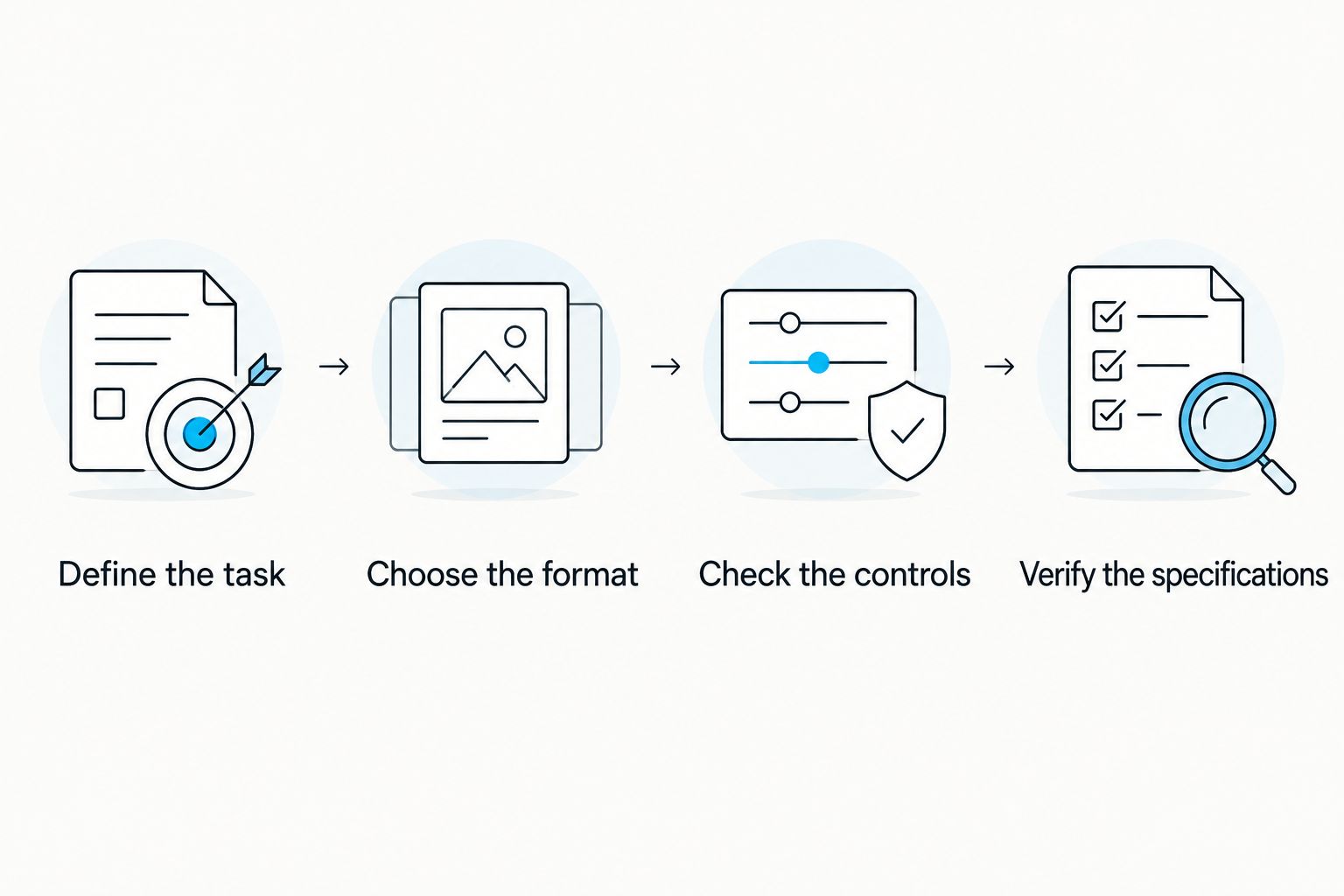
Use this sequence before comparing individual products. It separates the job from the specification list and prevents you from buying a light that duplicates a function you already have.
- Define the task. Decide whether you need close-up equipment lighting, visible observation or illumination for digital night vision.
- Choose the format. Decide whether the light must leave your hands free, move independently or remain fixed to a mounting point.
- Check the controls. Confirm how you select colour and brightness, including what happens when you switch the light back on.
- Verify the specifications. Check the exact model's power requirements, mounting arrangements and relevant compatibility before ordering.
For a 2026 setup, write down which jobs your existing equipment already covers. A thermal monocular does not remove the need for practical task lighting, but it changes what you need a visible light to do. Equally, a red-and-white light is not a substitute for the illuminator required by your particular digital night vision system.
Which Z-Vision products match these jobs?
These GoingDark options cover different functions. The comparison below uses the stated light modes and product formats; it does not assign unverified beam distances, runtimes or field-test results.
| Product | Stated format and modes | Best for | Trade-off |
|---|---|---|---|
| Z-Vision HS-33 Head Torch | Head torch with white, red and green light | Hands-free visible task lighting | The beam follows your head; confirm controls and fit suit your use |
| Z-Vision Light Bar – 6 – Red and White | Light bar with red and white LEDs | Buyers planning a fixed red-and-white lighting setup | Installation needs checking; a light bar does not replace a portable head torch |
| Z-Vision NV-303 IR Torch | Illuminator with red, 850 nm IR and 940 nm IR | Buyers needing red illumination plus infrared options | No white mode is stated; infrared suitability depends on the viewing device |
Choose the Z-Vision HS-33 for hands-free visible tasks, the Z-Vision Light Bar – 6 for a fixed red-and-white setup, or investigate the Z-Vision NV-303 when infrared is part of the requirement. These are different jobs, not a ranking of interchangeable lights.
The Z-Vision NV-303's 850 nm and 940 nm modes belong in a night vision compatibility discussion, not a red-versus-white brightness comparison. The Z-Vision HS-33's white, red and green modes address visible-light tasks instead.


Is red light the same as infrared light?
Red light is visible light; infrared light is outside the visible spectrum. A red torch illuminates a scene you can view directly. An infrared illuminator supplies radiation that a compatible night vision camera can detect.
The Z-Vision NV-303 lists 850 nm IR and 940 nm IR modes separately from its red mode. Those are distinct illumination options, not different names for red light.
Check your night vision device's requirements before selecting an illuminator. Do not assume that every device responds equally to every infrared wavelength, or that a torch sharing a brand name automatically suits your optic.
Does thermal imaging need a red or white light?
Thermal imaging does not need red or white illumination to form its thermal image. Thermal equipment detects emitted thermal radiation rather than relying on a visible beam reflected from the scene.
You still need to consider tasks outside the thermal view. Handling equipment, reading markings and checking your immediate surroundings are visible-light jobs. A thermal device and a task light can complement each other without doing the same thing.
Do not confuse a thermal display palette with the colour of an external light. A red-looking feature on a thermal screen does not mean the device is shining red light into the environment.
Will a red hunting light stop animals reacting?
Red light does not guarantee that an animal will remain unaware or undisturbed. Species differ in visual sensitivity, and colour alone does not determine the response to illumination.
Avoid turning an animal-vision claim into a universal product recommendation. Choose a light for the detail you need, its controls and its role in your setup—not an unsupported claim that a colour cannot be detected.
FAQ
What's better for hunting, a red light or a white light?
White light is better when you need colour detail; dim red light suits close-up tasks between observations in darkness. Neither colour is universally best, and neither replaces positive identification.
Does red light preserve night vision?
Dim red light generally interferes less with dark adaptation than bright white light. Brightness, exposure and reflected light still matter, so a powerful red beam is not automatically gentle on your eyes.
Can animals see a red hunting light?
Do not assume animals cannot see a red hunting light. Visual sensitivity differs between species, and red illumination does not guarantee an animal will ignore you.
Can I use an infrared torch without night vision equipment?
An infrared torch does not provide useful scene illumination for your unaided eyes. Use a visible light for direct viewing and a compatible infrared-sensitive device for infrared illumination.
Does a thermal scope need an infrared illuminator?
A thermal scope does not need an infrared illuminator to form its thermal image. Thermal imaging detects emitted thermal radiation rather than the reflected illumination used by digital night vision.
Which hunting light leaves my hands free?
A head torch leaves your hands free and directs its beam with your head. GoingDark lists the Z-Vision HS-33 Head Torch with white, red and green light modes; check the controls and fit against your intended tasks.
Should I buy a light with both red and white modes?
Choose red and white modes when you need both dim task lighting and colour detail from the same unit. Confirm the brightness controls, beam coverage and mounting format rather than choosing by colour count alone.
One last thing
The most useful feature might be the lowest usable output, not the brightest setting. A light that works well on distant objects can be awkward when its beam reflects off equipment directly in front of you.
Before committing to a 2026 hunting-light purchase, check how the light behaves during the ordinary jobs between observations: finding a control, checking a connection or reading a marking. Keep red for tasks it handles clearly, switch to white when colour matters, and treat infrared as a separate equipment decision.
Share:
Spot or flood hunting lights: choosing the beam pattern