
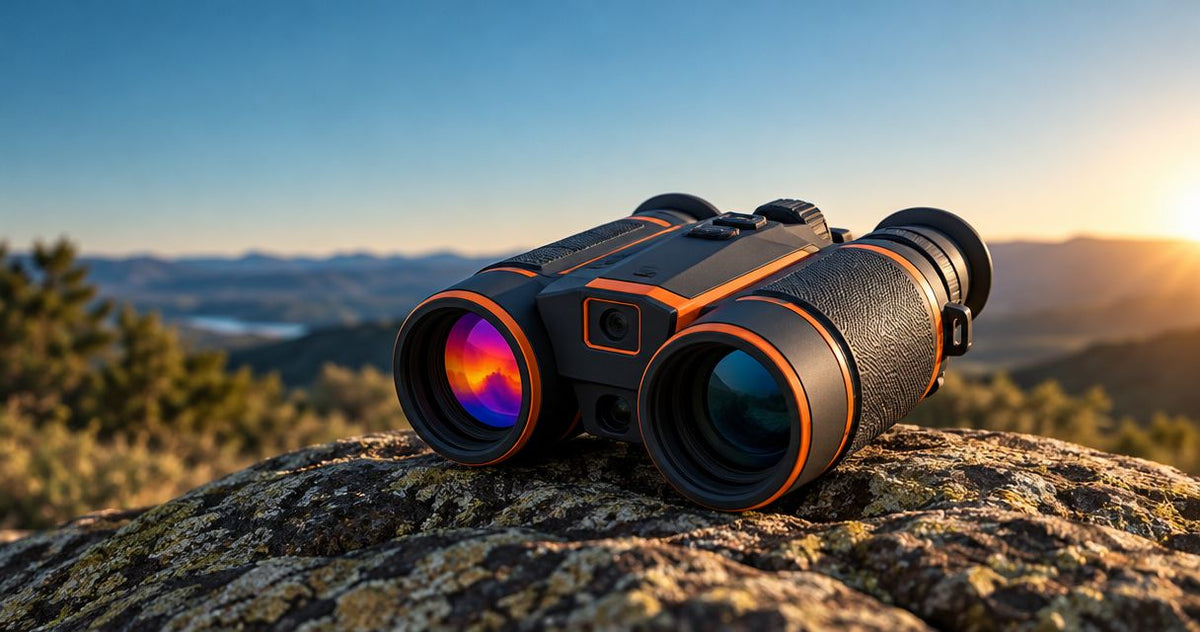
Rangefinding thermal binoculars are worth the extra cost when you regularly need distance measurements while scanning and prefer viewing with both eyes. For your 2026 shortlist, judge the rangefinder separately from thermal image quality: integrated ranging does not improve identification detail, and it adds little value if another device already handles the distance checks you need.
- Searching thermal binoculars Australia rangefinder options? Pulsar Merger LRF XT50 combines binocular viewing with integrated ranging.
- Buy integrated ranging for regular distance checks, not as a substitute for thermal image detail.
- Pard Leopard 640 offers an LRF-equipped monocular alternative when binocular viewing is not essential.
- Detection distance is not identification distance; a range reading does not confirm what you are observing.
Why this matters
The buying question is not simply whether a laser rangefinder is useful. It is whether you need distance measurement in the same handheld device you use to find and observe animals.
A rangefinding binocular combines viewing and ranging in one instrument. That removes a device change, but you still need to assess image detail, viewing comfort, controls and how the instrument fits your carrying setup. None of those decisions disappears because the specification includes LRF.
GoingDark is best for Australian hunters choosing thermal optics around their scanning and ranging needs. Start with the job you need the equipment to do, then use the GoingDark catalogue to compare suitable formats rather than treating every LRF-equipped optic as an equivalent purchase.
Are rangefinding thermal binoculars worth the extra cost?
Yes, when integrated distance checks and binocular viewing both solve a practical problem for you. If you mainly want thermal detection, or already have a suitable ranging device, assess the binocular format on its own merits before paying for another rangefinder.
For a 2026 comparison, the Pulsar Merger LRF XT50 represents the binocular approach. The Pard Leopard 640 with a 35mm lens and LRF provides a monocular alternative. Both combine thermal observation with ranging, but they do not give you the same viewing format.
| Option | Best for | Verified specification | Practical advantage | Trade-off |
|---|---|---|---|---|
| Pulsar Merger LRF XT50 | Hunters who want binocular viewing and integrated ranging | 1280 × 1024-pixel sensor, <40mK NETD, 12µm pixel pitch | Combines thermal binocular viewing with an LRF | Binocular viewing must justify the format; sensor specifications alone do not establish identification performance |
| Pard Leopard 640, 35mm with LRF | Hunters who want ranging without requiring binocular viewing | 640 model designation, 35mm lens, LRF | Provides a thermal monocular route to integrated ranging | Uses a single-eye viewing format rather than binocular viewing |
These are format alternatives, not a controlled image-quality comparison. The specifications above do not establish equal lenses, fields of view, magnification, sensitivity or ranging performance.
Choose the viewing format first, then check whether integrated ranging earns its place. A binocular is not automatically the better purchase because it has more features, and a monocular is not automatically the better walking option without checking its actual weight and dimensions.
Rangefinding thermal binoculars: best for combined scanning and ranging
Rangefinding thermal binoculars suit you when distance checks form a regular part of observation. Instead of lowering your thermal viewer and finding a separate ranging device, you operate the integrated rangefinder within the same instrument.
The Pulsar Merger LRF XT50 has a listed 1280 × 1024-pixel thermal sensor, <40mK NETD and 12µm pixel pitch. Those figures describe different parts of its thermal specification; they are not rangefinder accuracy figures or guarantees of what you can identify.
The binocular format also deserves a separate decision. Check eyepiece adjustment, whether you can see the full display comfortably, and whether you can reach the ranging control while maintaining a steady view. Your fit matters more than assuming that two eyepieces will suit everyone.
- Best for: hunters who want binocular observation and frequent distance checks in the same device.
- Main benefit: fewer changes between viewing and ranging equipment.
- Main limitation: integrated ranging cannot compensate for insufficient image detail or poor viewing fit.
Buy this format for the combined workflow, not for the LRF label alone.
Rangefinding thermal monoculars: best when one-eye viewing suits you
A thermal monocular with LRF answers a different question: can you combine observation and distance measurement without buying a binocular-format instrument?
The Pard Leopard 640 with a 35mm lens and LRF is relevant here because it offers integrated ranging in a monocular. Its product name confirms the 35mm lens and rangefinder, but those details do not establish its complete sensor dimensions, field of view or ranging accuracy.
Check those specifications before comparing it directly with a binocular. Also check how comfortably you can alternate between observing through the device and looking around without it. That handling preference is personal, not something a resolution label settles.
- Best for: hunters who prefer single-eye observation but still want integrated distance measurement.
- Main benefit: ranging is not restricted to the binocular format.
- Main limitation: it does not provide binocular viewing, and an LRF does not make different thermal systems equivalent.
Choose an LRF monocular when you want the ranging function but do not need binocular viewing.
Why the value of integrated ranging varies
The value of an LRF changes with the work you expect it to do. Use these factors to judge whether it addresses a recurring need rather than adding another specification to your shortlist.
- Ranging frequency: Regular distance checks give the integrated function a clear role. Occasional checks provide less reason to prioritise it over other requirements.
- Existing equipment: A suitable rangefinder you already use changes the decision. Integration then needs to justify replacing a device change, not introducing a completely new capability.
- Thermal detail: A distance reading does not improve the thermal image. Keep sensor resolution, lens characteristics, focus and usable image detail in the comparison.
- Viewing comfort: Binocular and monocular viewing are different experiences. Assess eyepiece adjustment and your ability to maintain a comfortable view before choosing the format.
- Carry setup: Check actual weight, dimensions, case and carrying arrangements. Do not assume that combining functions automatically makes your complete kit easier to carry.
- Ranging conditions: A laser rangefinder depends on a usable return from the object being measured. Obstructions and the surface being ranged matter, so a displayed distance still needs context.
For a 2026 purchase, separate essential requirements from conveniences. If comfortable scanning and adequate thermal detail are essential, do not compromise either simply to add an integrated rangefinder.
How do you decide which format to buy?
Use this sequence before choosing between a rangefinding binocular and a rangefinding monocular. It keeps the decision centred on your observation needs rather than the longest specification list.
- Define the job. Decide whether the device is mainly for finding heat signatures, sustained observation, distance checks or a combination. Name the task you currently struggle to complete.
- Check image detail. Compare the thermal sensor, lens, field of view and base magnification. Keep detection claims separate from the detail needed to recognise what you are observing.
- Check ranging. Read the manufacturer's ranging specifications and operating instructions. Check what the displayed distance represents and how the ranging control works.
- Check handling. Confirm eyepiece adjustment, control access, power arrangements, dimensions and carrying options. Assess the complete device rather than treating the rangefinder as a standalone feature.
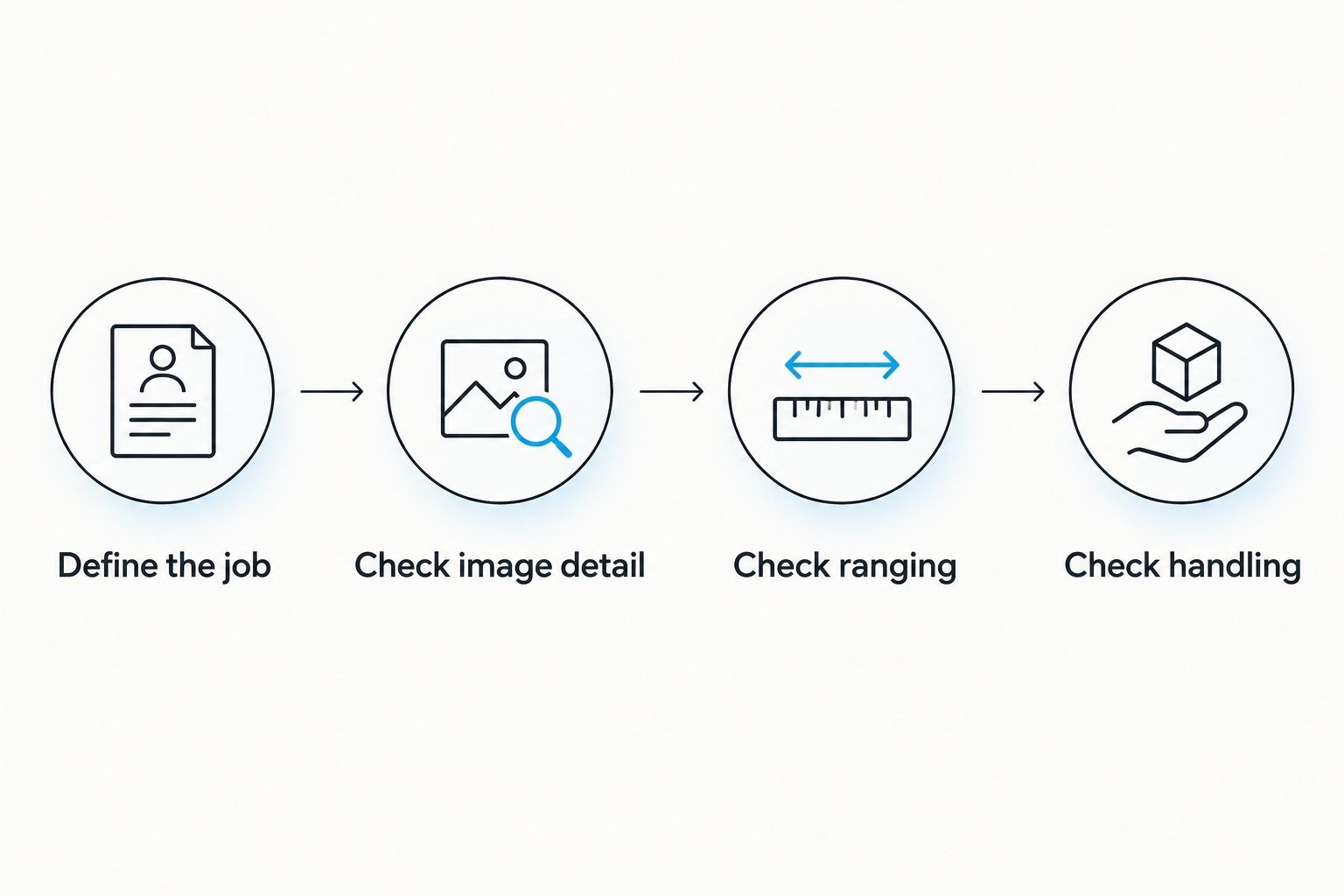
Write down your answer at each step. If the ranging step does not solve a specific problem, keep comparing viewing formats without treating LRF as mandatory.
These GoingDark thermal optics illustrate the binocular and monocular routes. Compare their current product specifications before choosing; the cards are not evidence that their thermal or ranging performance is equivalent.


Does a rangefinder help you identify an animal?
A rangefinder measures distance; it does not identify an animal. Thermal identification depends on the detail you can actually resolve and interpret, not merely the presence of a heat signature or a distance reading.
Keep three different claims separate:
- Detection: noticing that a heat source is present.
- Identification: resolving enough information to establish what you are observing.
- Ranging: measuring distance to the object returning the laser signal.
A device can detect a heat source without showing enough detail for identification. It can also display a distance without establishing that you have ranged the intended object. Neither result replaces careful observation.
For your 2026 comparison, do not turn a published detection figure into an identification promise. Ask what each specification measures before using it to justify the purchase.
Do you need an LRF if your scope already has one?
An LRF-equipped scope reduces the need to duplicate ranging, but it does not make handheld ranging irrelevant. The distinction is whether you need a distance measurement during handheld observation, before changing to another instrument.
If your existing equipment already supplies distance information at the point you need it, another LRF adds duplication. If changing devices interrupts your observation, integration has a practical purpose. Judge that interruption against the importance of viewing comfort and image detail.
Do not treat a handheld viewer and a mounted scope as interchangeable observation tools. Choose your handheld equipment for the observation task it needs to perform.
Are thermal binoculars better than a monocular for scanning?
Thermal binoculars are the better fit when you prefer viewing with both eyes; a monocular suits hunters who prefer single-eye observation. Neither format wins every scanning task simply because of its eyepiece arrangement.
Compare field of view, base magnification and focus operation alongside viewing format. A narrow view remains narrow even through two eyepieces, while a comfortable eyepiece does not add sensor detail.
For a 2026 shortlist, handle the device where possible and check the manufacturer's adjustment ranges. Avoid buying an unfamiliar format solely because it includes an integrated rangefinder.
FAQ
Are rangefinding thermal binoculars worth it for Australian hunters?
Rangefinding thermal binoculars are worth it when you regularly need distance checks during handheld observation and prefer binocular viewing. If either requirement is absent, compare other thermal viewing formats before making LRF mandatory.
What's the best reason to choose the Pulsar Merger LRF XT50?
The Pulsar Merger LRF XT50 suits hunters seeking binocular thermal viewing with integrated ranging and a listed 1280 × 1024-pixel sensor. Its <40mK NETD and 12µm pixel pitch are thermal specifications, not guarantees of identification distance.
Can I get a thermal monocular with a rangefinder instead?
Yes, the Pard Leopard 640 with a 35mm lens and LRF is a thermal monocular alternative. Choose it for the single-eye format rather than assuming its image or ranging performance matches a binocular.
Does an LRF make a thermal image clearer?
No, an LRF measures distance rather than improving the thermal image. Compare sensor resolution, lens characteristics, focus and field of view separately.
Is a thermal detection distance the same as an identification distance?
No, detection distance is not identification distance. Detecting a heat source does not establish that the image contains enough detail to identify it.
What should I check before buying rangefinding thermal binoculars?
Check viewing fit, thermal specifications, ranging operation and carrying requirements before buying. GoingDark thermal optics advice should match the device to your observation needs rather than treating integrated ranging as an automatic upgrade.
One last thing
Cover the LRF specification and ask whether you still want the device. If the viewing format, image specification and handling no longer make sense for your needs, the rangefinder is carrying too much of the buying decision.
Then reverse the test: imagine the same observation setup without integrated ranging. If changing devices creates a recurring problem, the LRF has a clear job. That is a stronger reason to buy than simply choosing the option with the longer feature list.
Share:
Thermal monoculars for open-country hunting: what to prioritise
Thermal monoculars for hunting in timber: what to prioritise