
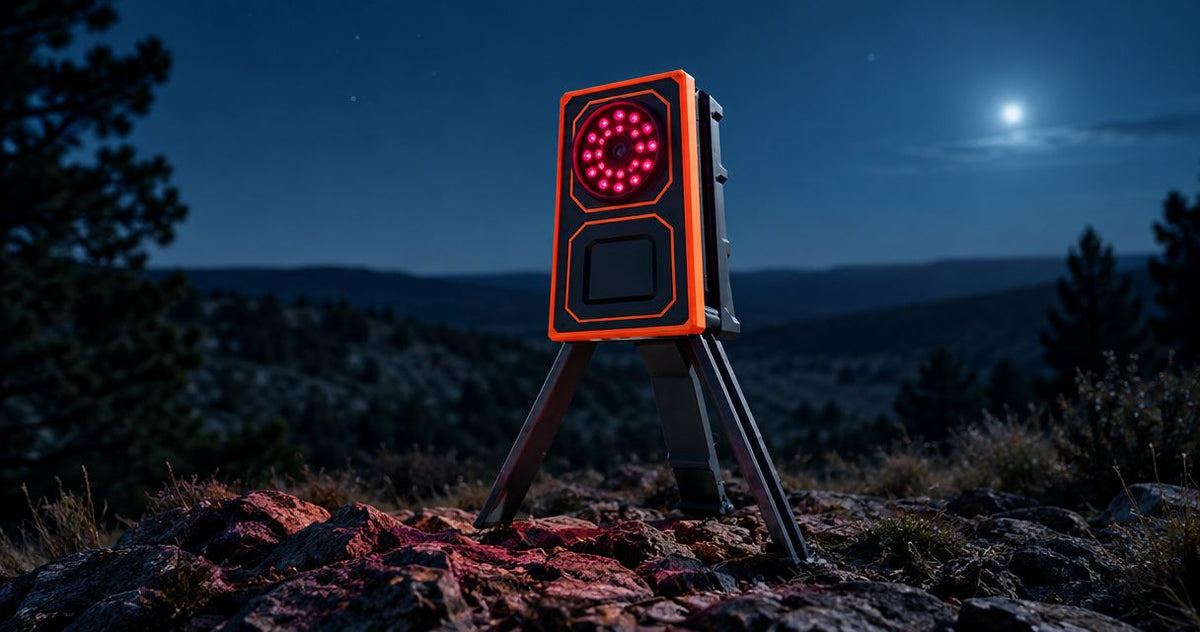
Best overall for wavelength choice: Z-Vision NV-303. Best dedicated 850nm LED option: PBIR-X. Best model-matched option for Nocpix NITE: Nocpix IR Infrared 850nm Torch. This 2026 guide compares IR illuminator choices at GoingDark for Australian hunters using digital night vision, with the buying decision based on compatibility, light modes and mounting—not unsupported distance claims.
- Z-Vision NV-303 is the best IR illuminator shortlist choice for buyers wanting both 850nm and 940nm modes.
- PBIR-X suits buyers specifically seeking an 850nm LED IR torch for digital night vision.
- Nocpix IR Infrared 850nm Torch suits Nocpix NITE owners seeking a model-specific accessory.
- Choose an illuminator for sensor compatibility and usable detail, not a claimed detection distance.
Why this matters
An IR illuminator supplies infrared light that a compatible digital night vision sensor turns into an image. It is an accessory for reflected-light imaging, not a way to increase a thermal sensor’s performance. Buying the wrong type of light leaves you with extra equipment rather than a better view.
GoingDark’s IR illuminator shortlist starts with the device you own, not the longest distance printed in a product name. Your sensor, lens, magnification, beam alignment and surroundings all affect the resulting image. A bright patch on the display is not the same as enough detail to identify an animal.
For a 2026 purchase, decide whether you need a dedicated infrared torch, selectable wavelengths or visible-light modes as well. Those are different jobs. Match the illuminator to the job before comparing accessories.
What makes the best IR illuminator?
Use these five criteria to judge the shortlist:
- Sensor compatibility: Confirm that your digital night vision device supports the illuminator’s wavelength. A familiar connector or matching brand name does not replace that check.
- Wavelength choice: An 850nm-only torch and a selectable 850nm/940nm illuminator offer different choices. Buy the modes you will actually use.
- Beam control: Check how the beam adjusts and whether it covers your viewing area. Concentrated illumination and broad coverage solve different problems.
- Mounting fit: Check the torch body, mounting interface, clearance and adjustment. The beam needs to align with the optic without obstructing other controls.
- Power and operation: Confirm battery requirements, charging arrangements and access to switches. An awkward control or incompatible battery adds friction every time you set up.
Compatibility comes first; output is useful only when the optic can use it. Do not assume every infrared accessory suits every digital scope, binocular or clip-on device.
Best IR illuminators at a glance
The order below follows buying needs rather than an unverified brightness ranking. Each option has a separate reason to make your shortlist.
| Option | Best for | Standout feature stated in the product information | Key limitation or buying check |
|---|---|---|---|
| Z-Vision NV-303 | Selectable infrared wavelengths | Red, 850nm IR and 940nm IR modes | Your optic must support the selected wavelength |
| PBIR-X 850nm LED IR Torch | A dedicated LED infrared setup | 850nm LED format | Choose another option if you specifically need 940nm |
| Nocpix IR Infrared 850nm Torch for Nocpix NITE | Nocpix NITE owners | Named for the Nocpix NITE system | Confirm fit for your exact NITE model and mounting arrangement |
| Z-Vision DN-303 | Infrared plus visible-light utility | Red, white and 850nm IR modes | Its stated modes do not include 940nm |
| FILSKIS F1 | Buyers specifically seeking laser illumination | 850nm infrared laser format | Requires attention to laser safety instructions and device compatibility |
1. Z-Vision NV-303: best IR illuminator for wavelength choice
The Z-Vision NV-303 combines red light, 850nm infrared and 940nm infrared modes. It is the most flexible wavelength choice in this shortlist because both infrared wavelengths are explicitly named in its product information.
That makes the Z-Vision NV-303 a sensible starting point if wavelength selection is part of your buying brief. It does not establish that both modes work equally well with your optic. Check the device manufacturer’s guidance before treating selectable wavelengths as a useful upgrade.
Z-Vision NV-303 pros:
- Both 850nm and 940nm infrared modes are named.
- Red light provides a separate visible-light mode.
- You can shortlist one illuminator when comparing two infrared wavelength requirements.
Z-Vision NV-303 cons:
- Selectable wavelengths do not guarantee equal sensor response.
- The additional modes add little value if your setup only needs 850nm.
- Its listed modes do not include the white-light function offered by the DN-303.
Best for: Buyers choosing between infrared wavelengths, or wanting selectable IR modes alongside red light.
Before ordering, establish which wavelength your digital device supports and how you will mount the torch. Do not choose the Z-Vision NV-303 simply because it has more modes; choose it because those modes answer a real requirement.
Verdict: Buy the Z-Vision NV-303 for wavelength choice; skip the extra functionality if you only need a dedicated 850nm torch.
2. PBIR-X: best IR illuminator for a dedicated LED setup
The PBIR-X is identified as an 850nm LED IR torch. Its shortlist role is straightforward: it suits a buyer who specifically wants LED infrared illumination at that wavelength, rather than selectable visible-light and infrared modes.
The PBIR-X belongs on your list when your optic supports 850nm and you want to assess a dedicated torch. LED format alone does not establish beam width, runtime or image quality. Check those practical requirements against your device and mounting position.
PBIR-X pros:
- The 850nm wavelength is clearly identified.
- LED illumination is explicitly named.
- Its dedicated IR role matches a focused buying requirement.
PBIR-X cons:
- It is not the shortlist choice for a buyer requiring 940nm.
- A dedicated IR torch does not replace a visible-light torch for ordinary tasks.
- You still need to establish mounting fit and beam coverage for your optic.
Best for: Digital night vision owners specifically seeking an 850nm LED IR torch.
For a 2026 upgrade, start by identifying what your existing illumination fails to do. If nearby branches dominate the image, more light alone is not the answer. If the beam misses the viewing area, alignment deserves attention before a replacement purchase.
Verdict: Buy the PBIR-X when 850nm LED illumination is your requirement; hold if you have not identified the problem with your current setup.
3. Nocpix IR Infrared 850nm Torch: best for Nocpix NITE owners
The Nocpix IR Infrared 850nm Torch is named specifically for Nocpix NITE. That model reference makes it the most direct starting point here for a NITE owner looking for an infrared accessory.
The Nocpix torch’s appeal is device-specific relevance, not a claimed advantage over every third-party illuminator. Confirm your exact NITE model, the required mount and the connection or control arrangements before ordering. A product-family reference is useful, but the complete setup still matters.
Nocpix IR Infrared 850nm Torch pros:
- Nocpix NITE is explicitly identified in the product name.
- The infrared wavelength is specified as 850nm.
- It gives NITE owners a relevant accessory to check before broader alternatives.
Nocpix IR Infrared 850nm Torch cons:
- The NITE-specific positioning does not establish compatibility with unrelated optics.
- It is not the option to choose specifically for 940nm.
- Your exact mounting arrangement still needs confirmation.
Best for: Nocpix NITE owners seeking a torch named for their device family.
Write down the full model designation before comparing accessories. This avoids choosing from a brand name alone and helps separate the illuminator itself from any additional mount or power equipment your setup requires.
Verdict: Buy the Nocpix IR Infrared 850nm Torch after confirming exact NITE fit; skip assumptions about use with other devices.
4. Z-Vision DN-303: best for infrared and visible-light utility
The Z-Vision DN-303 combines red light, white light and 850nm infrared. Its distinct use case is a buyer who wants visible-light functions as well as illumination for compatible digital night vision.
White light is useful for ordinary tasks where you need visible illumination rather than a night vision image. That is a different requirement from choosing between infrared wavelengths. The Z-Vision DN-303 and NV-303 therefore should not be treated as interchangeable just because both carry the Z-Vision name.
Z-Vision DN-303 pros:
- White light is explicitly included.
- Red light provides another visible-light mode.
- Its 850nm infrared mode addresses a compatible digital night vision setup.
Z-Vision DN-303 cons:
- Its stated modes do not include 940nm infrared.
- Visible-light modes do not improve infrared sensor compatibility.
- Extra modes have little buying value if you only want dedicated IR illumination.
Best for: Buyers wanting red, white and 850nm infrared functions in one illuminator.
Compare the DN-303 against your actual equipment list. If you need visible lighting as well as infrared, the mode combination is relevant. If you already have suitable visible lighting, focus the comparison on infrared compatibility and mounting instead.
Verdict: Buy the Z-Vision DN-303 for its visible-light combination; skip it if selectable 940nm infrared is essential.
5. FILSKIS F1: best for buyers specifically seeking laser illumination
The FILSKIS F1 is an 850nm infrared laser illuminator. It is the laser-format option in this shortlist, distinct from the explicitly LED-labelled PBIR-X.
Choose the FILSKIS F1 because you have established a need for laser illumination, not because a distance claim settles the comparison. A stated illumination distance does not establish identification distance through your scope. Follow the manufacturer’s laser safety instructions, including warnings about direct or reflected exposure.
FILSKIS F1 pros:
- Infrared laser format is explicitly identified.
- Its wavelength is specified as 850nm.
- It provides a relevant comparison for buyers deciding between laser and LED formats.
FILSKIS F1 cons:
- Laser operation adds safety considerations that require careful attention.
- An illumination-distance claim does not guarantee usable identification detail.
- Laser format alone does not establish suitability for your sensor or mounting arrangement.
Best for: Buyers deliberately seeking an 850nm infrared laser and prepared to follow its operating instructions.
For a 2026 comparison, keep light-source format separate from performance claims. Confirm the controls, beam adjustment and safety information before deciding that a laser illuminator suits your use.
Verdict: Hold on the FILSKIS F1 until compatibility and safe operation are clear; buy only when laser illumination answers your requirement.
Match the light to the job
The choice comes down to three different needs: wavelength choice, dedicated infrared or visible-light utility. Start with your optic’s wavelength requirements, then decide which of those jobs the illuminator needs to perform. This prevents extra modes from distracting you from compatibility.
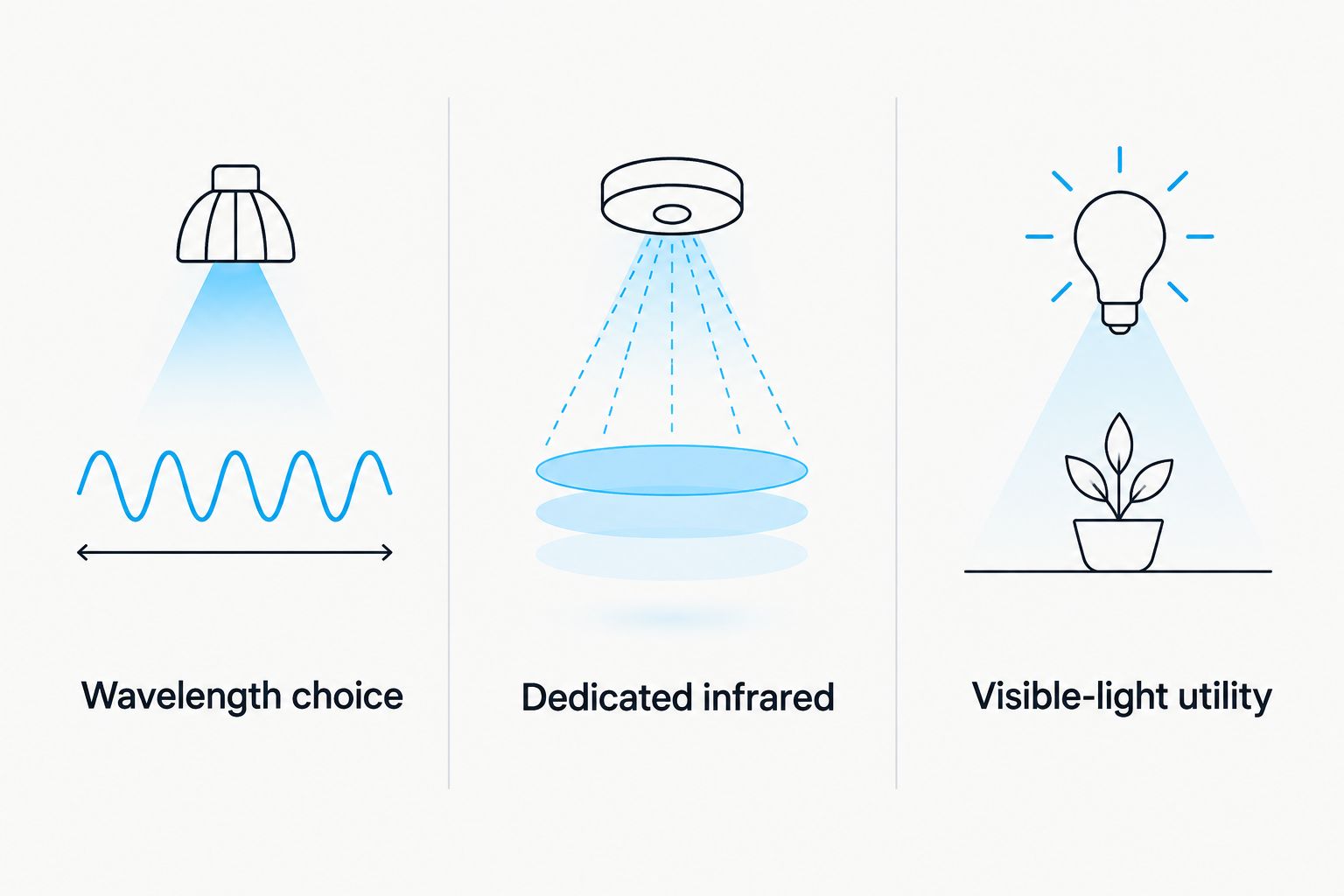
The product cards below group the selectable-mode and laser options discussed above. Choose the relevant function first, then check the complete setup details on the product page.


Check the setup before replacing the illuminator
A poor night vision image does not automatically identify a weak torch. Work through these checks before buying another illuminator:
- Confirm night mode. Follow the optic’s instructions for infrared operation and the correct imaging mode.
- Check alignment. Establish whether the illuminated area overlaps the area you are viewing.
- Check foreground reflections. Nearby grass, branches and equipment can reflect light back towards the sensor and dominate the image.
- Adjust beam coverage. Where adjustment is supported, match coverage to the viewing area rather than concentrating everything into a bright centre.
- Assess usable detail. Look for the detail needed for your observation task, not just screen brightness.
Keep comparisons consistent. Changing magnification, location and illumination at the same time makes it harder to identify which change helped. Follow the device instructions and assess the image under comparable conditions.
How we ranked these IR illuminators
This 2026 shortlist ranks explicitly stated wavelengths, light modes, source type and named device fit. It does not claim hands-on testing, measured output or comparative identification distances.
The Z-Vision NV-303 takes the default position for selectable infrared wavelengths. The remaining options each answer a separate requirement: dedicated LED illumination, NITE-specific relevance, visible-light utility or laser format. There is no single performance winner established by those specifications alone.
Which IR illuminator should you choose?
Choose the Z-Vision NV-303 if wavelength choice is the unresolved part of your buying decision. Choose the PBIR-X when you specifically need an 850nm LED torch, or start with the Nocpix accessory when you own a NITE device.
The Z-Vision DN-303 suits a combined visible-light and infrared requirement. The FILSKIS F1 belongs on a deliberate laser-illuminator shortlist, with safety and compatibility checked first.
GoingDark’s IR illuminator buying advice is simple: match the light to the optic and the task. Do not buy additional modes, a different light source or a distance claim without establishing what your setup needs.
FAQ
What’s the best IR illuminator for digital night vision in 2026?
The Z-Vision NV-303 is the default shortlist choice for buyers wanting selectable 850nm and 940nm infrared modes. The best fit still depends on your optic’s wavelength support and mounting requirements.
Is 850nm better than 940nm for my night vision scope?
Choose the wavelength your scope supports and that suits your imaging requirement. Both are infrared wavelengths, but their suitability must be checked against the specific device rather than assumed from the torch alone.
Does an IR illuminator improve a thermal scope?
An IR illuminator does not illuminate the scene for a thermal sensor in the way it does for digital night vision. Thermal imaging detects emitted thermal radiation rather than relying on reflected illuminator light.
Which illuminator should I check for a Nocpix NITE?
Start with the Nocpix IR Infrared 850nm Torch for Nocpix NITE. Confirm compatibility with your exact model and mounting arrangement before ordering.
What’s the difference between the Z-Vision NV-303 and DN-303?
The NV-303 lists red, 850nm IR and 940nm IR modes; the DN-303 lists red, white and 850nm IR modes. Choose the NV-303 for infrared wavelength choice or the DN-303 for white-light utility.
Does a longer illumination distance mean I can identify animals further away?
No, illumination distance is not identification distance. Identification depends on the detail your complete imaging setup resolves under the actual conditions.
Why does my night vision image look bright but unclear?
Foreground reflections, beam misalignment or unsuitable beam coverage can produce a bright but unclear image. Check those factors and the optic’s settings before assuming you need a different illuminator.
One last thing
Before your 2026 purchase, write one sentence describing the failure you want to fix: incompatible wavelength, insufficient coverage, poor alignment or missing visible-light functionality. If you cannot name the problem, pause the purchase and check the setup.
A brighter image is not automatically a more informative image. Buy for usable detail and compatibility, not the largest distance claim.
Share:
Thermal clip-on buying guide for Australian hunters
Thermal imaging monocular specs: NETD and pixel pitch