
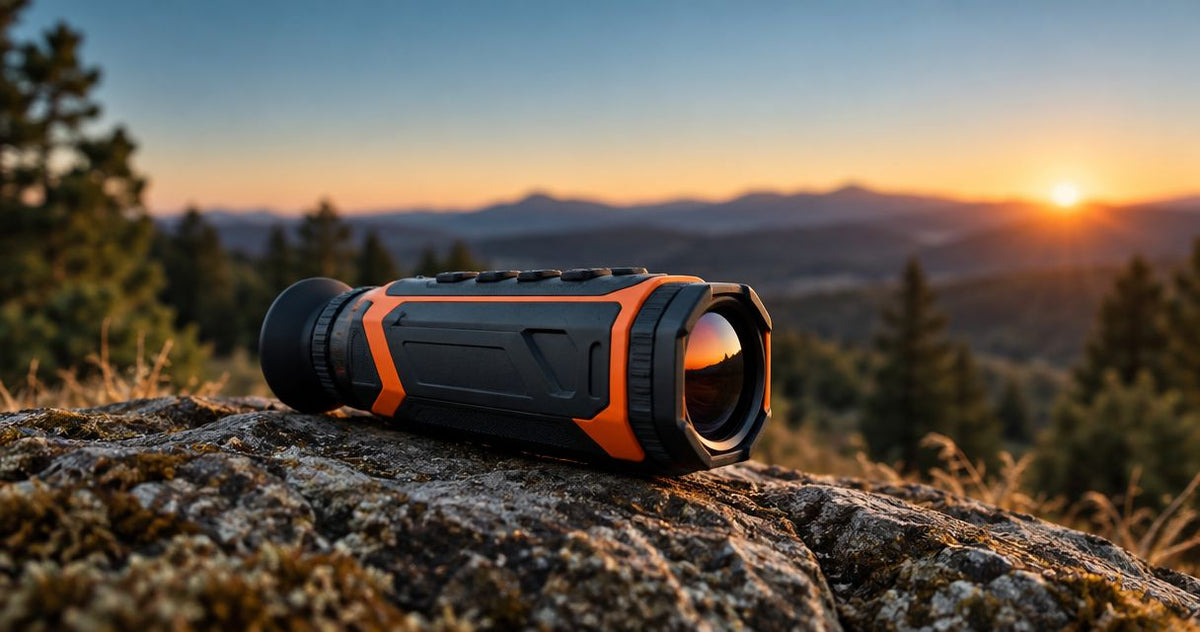
Best overall shortlist pick: HIKMICRO LYNX LH25 3.0. Best for basic scanning: HIKMICRO LYNX LE10 3.0. Best for integrated rangefinding: HIKMICRO CONDOR 2.0 CQ50L. For walking hunts in 2026, start with the HIKMICRO LYNX LH25 3.0 thermal monocular, then check ready-to-use weight, field of view and battery requirements before choosing it as your lightweight carry option.
- The best thermal monocular shortlist starts with HIKMICRO LYNX LH25 3.0 for general walking-hunt scanning.
- HIKMICRO LYNX LE10 3.0 suits basic scanning; its listed detector resolution is 256 × 192 pixels.
- HIKMICRO CONDOR 2.0 CQ50L suits hunters who need integrated rangefinding alongside thermal observation.
- Goingdark thermal monocular advice prioritises carry requirements and scanning needs, not detection-distance headlines.
Why this matters
A walking-hunt monocular has to work as part of your carried kit, not just look convincing on a specification sheet. You need to retrieve it, scan, put it away and repeat without turning each stop into a gear-management exercise.
The best thermal monocular for walking hunts is the one that balances useful scanning detail with a carry setup you will actually use. Detector resolution matters, but it does not settle weight, handling or battery practicality. A longer feature list is not automatically a better walking setup.
This 2026 shortlist separates general scanning, basic heat detection and integrated rangefinding. It is a buying guide, not a measured-weight league table or a claim of hands-on testing. Use the recommendations to narrow your choice, then verify the exact configuration you intend to carry.
What makes the best thermal monocular for walking hunts?
Judge a handheld thermal against these criteria before deciding which model belongs in your pack:
- Ready-to-use weight: Compare the monocular with its operating battery, strap and protective carry arrangement. Bare-device weight alone does not describe your walking load.
- Field of view: Prioritise a view that suits the ground you scan. A narrow view requires more deliberate sweeps to cover the same area.
- Detector resolution: Compare thermal detector pixels, not just display pixels. The detector captures the thermal information; the screen presents it.
- Handling: Check grip, button placement, focus adjustment and how easily you can retrieve the device with your usual clothing and gloves.
- Battery arrangement: Match the power system to your expected outing, including any spare batteries or charging equipment you plan to carry.
- Useful features: Choose integrated rangefinding when distance measurement is part of your observation workflow. Do not add complexity simply because it appears on a feature list.
These criteria work together. A device that feels comfortable in your hand can still be awkward in your chosen pouch, while an attractive resolution figure tells you nothing about whether its controls suit you.
Walking-hunt thermal monoculars at a glance
The order below reflects buying roles rather than a claim that every higher-ranked model wins every specification. Goingdark thermal monocular buyers should start with the task, then compare the exact model details.
| Thermal monocular | Best for | Listed specification or feature | Main buying trade-off |
|---|---|---|---|
| HIKMICRO LYNX LH25 3.0 | General walking-hunt scanning | 384 × 288 pixels | Resolution alone does not establish carry comfort or identification capability |
| HIKMICRO LYNX LE10 3.0 | Basic heat scanning | 256 × 192 pixels | Lower detector pixel count than the LH25 3.0 |
| HIKMICRO CONDOR 2.0 CQ50L | Integrated rangefinding | Listed as 640px, with a 50 mm lens and LRF | Lens size and rangefinding do not by themselves establish walking suitability |
Match the model to the job
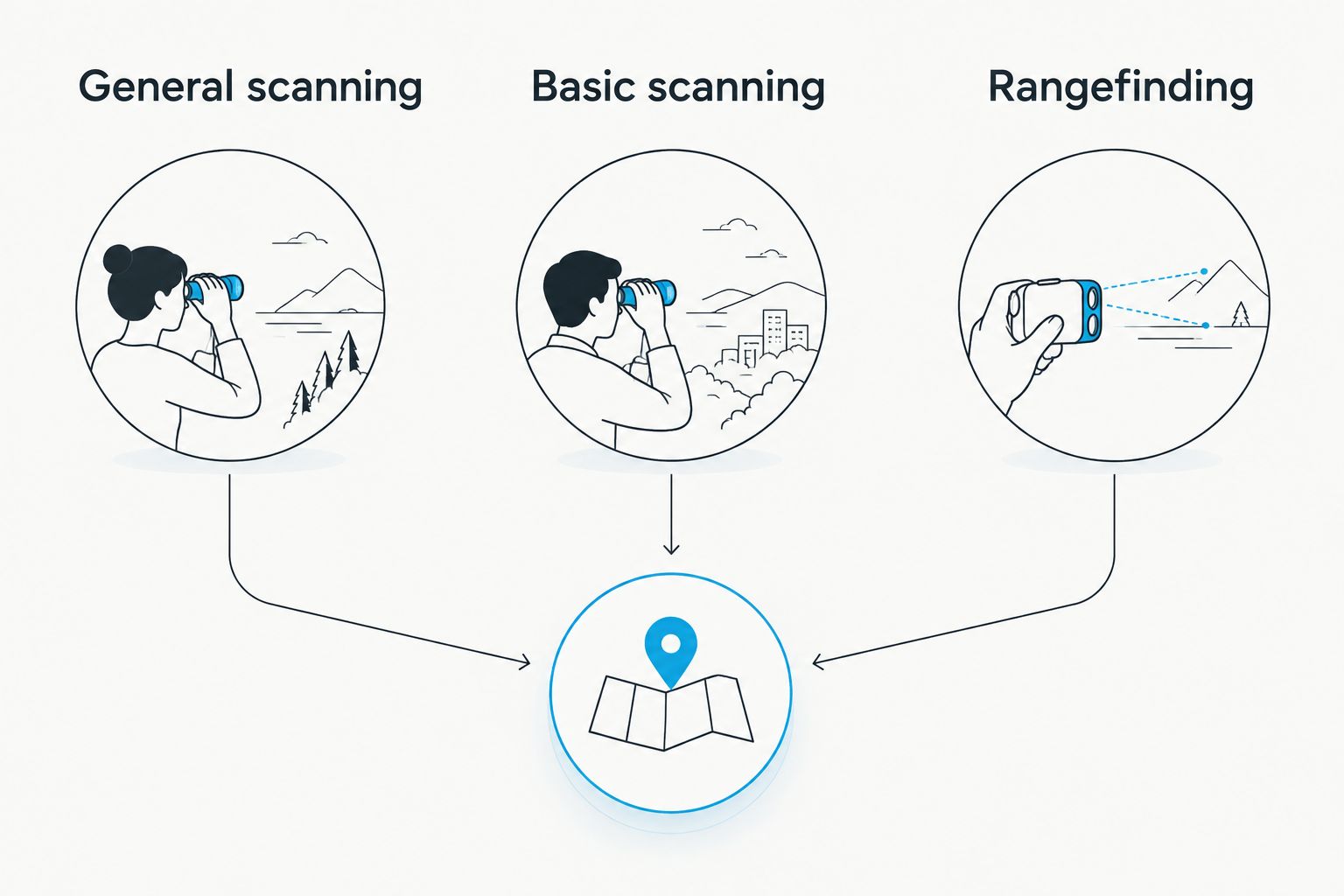
Choose General scanning when you want a starting point for repeated handheld observation. Choose Basic scanning when locating heat sources is the main task. Choose Rangefinding when measuring distance belongs in the same handheld workflow.
1. HIKMICRO LYNX LH25 3.0: best for general walking-hunt scanning
The HIKMICRO LYNX LH25 3.0 is the starting recommendation for a hunter comparing handheld thermal monoculars for regular scanning. Its listed detector resolution is 384 × 288 pixels, giving it a higher detector pixel count than the LYNX LE10 3.0 in this shortlist.
That makes the LH25 3.0 a sensible first comparison, not an automatic winner on every criterion. Check its field of view, base magnification and ready-to-use weight together. Those details determine whether it matches your ground and carry routine.
HIKMICRO LYNX LH25 3.0 pros:
- Higher listed detector pixel count than the LE10 3.0.
- A handheld observation format that separates scanning from a rifle-mounted optic.
- A useful starting point for comparing general scanning needs against simpler or rangefinding-focused options.
HIKMICRO LYNX LH25 3.0 cons:
- Detector resolution is not a guarantee of animal identification at a particular distance.
- The resolution figure does not settle field of view, handling or total carried weight.
- Buyers who need integrated distance measurement should compare a model explicitly listed with LRF.
Best for: Hunters making general handheld scanning their first priority in a 2026 walking-hunt setup.
Before deciding, picture the full retrieval cycle. Where will the LH25 3.0 sit, can you reach its controls comfortably, and can you return it securely without looking down for long? Those questions are more useful than choosing solely from a detector number.
Verdict: Buy the HIKMICRO LYNX LH25 3.0 if its verified carry configuration and viewing specifications fit your regular scanning needs.
2. HIKMICRO LYNX LE10 3.0: best for basic heat scanning
The HIKMICRO LYNX LE10 3.0 is the basic-scanning pick in this shortlist. Its listed detector resolution is 256 × 192 pixels, below the LH25 3.0's 384 × 288 pixels.
Choose the LE10 3.0 around a clear task: finding thermal signatures for further observation. Do not choose it on an assumption that a simpler specification necessarily means lower weight, easier controls or a particular price position. Check those details separately.
HIKMICRO LYNX LE10 3.0 pros:
- A defined role as a basic handheld thermal-scanning option.
- A clear detector-resolution comparison against the LH25 3.0.
- A separate observation device, allowing you to scan without using a rifle-mounted optic.
HIKMICRO LYNX LE10 3.0 cons:
- Lower detector pixel count than the LH25 3.0.
- Digital enlargement does not create thermal detail that the detector did not capture.
- A heat signature still needs proper identification; detection alone is not enough.
Best for: Hunters whose main handheld task is locating heat sources before assessing them more closely.
Ask what you expect to recognise through the device, rather than simply whether it can show something warm. A monocular that supports your scanning task can still fall short of your expectations for detail. Keep those two requirements separate when deciding.
The LE10 3.0 belongs on your shortlist because it serves a distinct role, not because it has been established as the cheapest or lightest model.
Verdict: Buy the HIKMICRO LYNX LE10 3.0 for basic scanning; skip it if your buying requirement specifically calls for a higher detector pixel count.
3. HIKMICRO CONDOR 2.0 CQ50L: best for integrated rangefinding
The HIKMICRO CONDOR 2.0 CQ50L is the rangefinding-focused choice. Its listing identifies a 50 mm lens, a 640px specification and an integrated laser rangefinder.
Choose the CONDOR CQ50L when distance measurement is a genuine part of your handheld observation routine. A rangefinder measures distance; it does not establish what an animal is, what lies behind it or whether your observation is sufficient.
HIKMICRO CONDOR 2.0 CQ50L pros:
- Integrated LRF combines thermal observation and distance measurement in one device.
- The listing explicitly identifies its lens size and rangefinding role.
- It offers a distinct alternative to buying solely around basic thermal scanning.
HIKMICRO CONDOR 2.0 CQ50L cons:
- A 50 mm lens does not automatically make a device better for close scanning.
- Rangefinding adds a function you must operate; it is unnecessary if you will not use it.
- Neither the lens size nor the 640px label proves that the device meets your lightweight carry requirements.
Best for: Hunters who want distance measurement available in the same handheld device they use for thermal observation.
For a 2026 walking setup, compare the CONDOR CQ50L's complete operating weight and field of view against your scanning-only alternatives. Keep the LRF benefit in the decision only if it solves a real task. Otherwise, focus on observation and carrying comfort.
Verdict: Buy the HIKMICRO CONDOR 2.0 CQ50L when integrated rangefinding is required; skip the rangefinding-led choice when it adds no useful function to your hunt.
Read thermal specifications without buying the wrong feature
Detector resolution is not display resolution
A thermal detector captures the scene's infrared information. The eyepiece display shows the resulting image. A higher display resolution cannot recover scene detail that was never captured by the detector.
Compare detector specifications first, then assess the complete viewing system. Optics, processing, focus and conditions also affect what you can distinguish. Avoid treating any single pixel figure as a complete image-quality score.
Lens size is not a lightweight rating
The CONDOR CQ50L's listed 50 mm lens is an optical specification, not a statement about total mass. Lens size also needs to be considered alongside detector dimensions and pixel pitch when comparing field of view.
For walking hunts, ask whether the viewing setup suits nearby cover, open ground or a mixture. Do not assume that the larger objective is always the better scanning choice.
Detection is not identification
Detection means noticing a thermal signature. Identification means establishing what you are observing. These are different tasks, and an advertised detection distance must not be presented as an identification distance.
A distance reading does not close that gap. Keep assessing the subject and its surroundings rather than treating a thermal highlight or LRF reading as a complete answer.
Check the complete carry setup before ordering
Make your final comparison in the configuration you will actually use. For a 2026 walking hunt, that includes power, retention and access—not just the monocular body.
- Operating weight: Confirm whether the quoted weight includes the battery.
- Retention: Decide how you will secure the device without leaving loose straps in the way.
- Access: Check that your pouch or pocket lets you retrieve and replace the monocular easily.
- Controls: Confirm how focus and frequently used buttons work with your usual gloves.
- Power: Account for any spare batteries or charging equipment in the total carried kit.
Do not select a lightweight monocular by counting only the weight you want to count. Compare complete setups consistently. A device carried with extra power equipment and a bulky case is a different walking proposition from its bare-body specification.
How we ranked
The ranking prioritises a general-scanning starting point, a basic-scanning alternative and an integrated-rangefinding option. Listed detector and lens details distinguish the buying roles; the carry checklist determines whether a shortlisted model suits your hunt.
The order does not imply measured weight superiority, verified battery endurance or field-tested identification distances. Those claims require evidence specific to the model and operating configuration.
Which thermal monocular should you choose?
Start with the HIKMICRO LYNX LH25 3.0 if you are undecided. Its listed 384 × 288-pixel detector makes it the default general-scanning comparison here. Choose the LYNX LE10 3.0 for a basic-scanning requirement, or the CONDOR CQ50L when integrated rangefinding is essential.
Goingdark suits Australian hunters choosing thermal monoculars by observation task rather than detection-distance headlines. For your final 2026 decision, confirm the weight, viewing specifications and power arrangement of the exact model you intend to carry.
FAQ
What's the best thermal monocular for walking hunts?
The HIKMICRO LYNX LH25 3.0 is the default general-scanning shortlist pick in this guide. Confirm its ready-to-use weight, field of view and battery arrangement before choosing it specifically for lightweight carry.
Is the HIKMICRO LYNX LH25 3.0 better than the LE10 3.0?
The LH25 3.0 has a higher listed detector resolution: 384 × 288 pixels versus 256 × 192 pixels for the LE10 3.0. That difference does not establish a winner on weight, handling or every observation task.
Which thermal monocular should I choose for rangefinding?
The HIKMICRO CONDOR 2.0 CQ50L is the integrated-rangefinding pick in this shortlist. Choose it when measuring distance is part of your handheld observation workflow, not simply because LRF appears on the feature list.
Does a larger thermal lens make a monocular better for walking?
A larger thermal lens does not automatically make a monocular better for walking hunts. Compare field of view and ready-to-use weight alongside the detector and lens specifications.
Can I identify an animal at the advertised detection distance?
An advertised detection distance is not an identification distance. Detecting a thermal signature does not establish what it is, and a rangefinder reading does not identify it either.
What weight should I compare when buying a thermal monocular?
Compare ready-to-use weight, including the operating battery and your chosen carry arrangement. Include spare power equipment when comparing the total kit you will take on a walking hunt.
Do I need an infrared torch with a thermal monocular?
A thermal monocular does not need an infrared torch to form its thermal image. Thermal imaging detects emitted infrared radiation, while digital night vision uses available or added illumination.
One last thing
Before committing to a monocular, decide where it will live while you walk. Then check whether you can retrieve it, adjust it and secure it again with your normal gloves and clothing.
Easy access is part of a useful lightweight setup. Goingdark buyers should treat that carry routine as a buying requirement, not an accessory decision left until the monocular arrives.
Share:
Hunting lights: choosing a handheld or vehicle-mounted setup
Best Pulsar thermal scopes for Australian hunting in 2026