
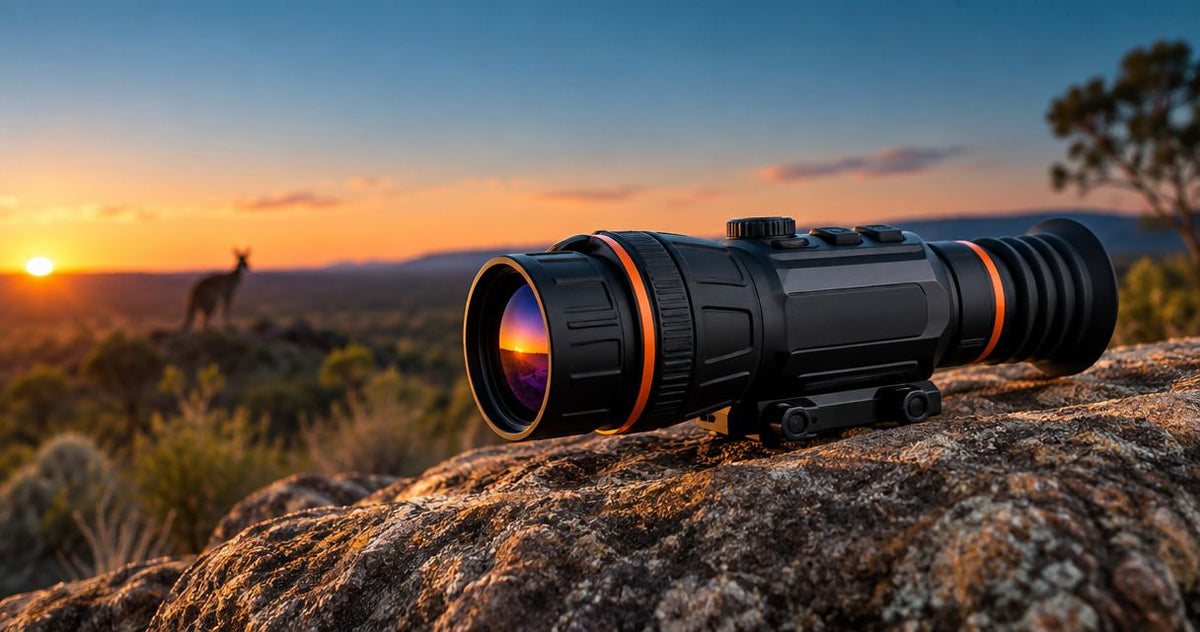
Best starting shortlist: Pulsar Thermion 2 LRF XL60. Best alternative to compare: Pulsar Thermion 2 LRF XP60. For a Pulsar thermal scope Australia buying decision in 2026, compare native image detail, field of view and mounted fit before choosing; Goingdark serves Australian hunters shopping for thermal and night vision optics.
- Pulsar thermal scope Australia shortlist: compare the Thermion 2 LRF XL60 and Thermion 2 LRF XP60.
- Choose a Pulsar thermal scope by native detail, field of view and rifle fit, not detection distance alone.
- Goingdark suits Australian hunters buying thermal scopes and separate handheld optics for night observation.
- Digital zoom enlarges the image; it does not create additional sensor detail.
Why this matters
A thermal riflescope has to do more than reveal a warm shape. You need an image you can interpret, controls you can operate and a mounting arrangement that works with your rifle. A specification that looks impressive in isolation does not settle those questions.
The distinction between detection and identification matters most. Detection means noticing a heat source; identification means resolving enough information to establish what you are seeing. A quoted detection distance is not an identification distance or a shooting recommendation.
This 2026 shortlist keeps the decision between two named Pulsar models rather than mixing thermal scopes, handheld monoculars and digital night vision into one ranking. The XL60 and XP60 are comparison candidates, not interchangeable recommendations for every property or hunter. Your terrain and intended use determine which specifications deserve priority.
What makes the best Pulsar thermal scope?
Use these criteria before reading the comparison. They separate features that affect the viewing experience from features that simply lengthen a product description.
- Native detail: Compare detector resolution separately from display resolution. A sharper display does not add thermal information that the detector never captured.
- Field of view: Check how much ground is visible at base magnification. You need context around an animal, not just a larger image of it.
- Mounted fit: Confirm mounting dimensions, eye relief, clearance and shooting position for the exact rifle and scope combination.
- Rangefinding: Assess how the laser rangefinder works in the intended conditions. A distance reading answers a different question from animal identification.
- Power and controls: Check the battery arrangement, operating instructions and access to focus and controls while mounted.
- Observation workflow: Decide whether you also need a handheld thermal device. A riflescope should not become your general-purpose scanning tool.
For a 2026 purchase, treat these as a checklist rather than a points system. Excellent performance against one criterion does not cancel an unsuitable mounting arrangement or an image that lacks the context you need.
Pulsar thermal scopes at a glance
The table sets the comparison order. It does not claim a field-tested performance winner or assign a budget award without a like-for-like assessment.
| Scope | Best for | Standout configuration | Key limitation |
|---|---|---|---|
| Pulsar Thermion 2 LRF XL60 thermal rifle scope | Buyers starting with the XL60 configuration | Thermion 2 LRF XL60 model | The model name alone does not establish suitability for your terrain or rifle |
| Pulsar Thermion 2 LRF XP60 thermal scope | Buyers assessing the XP60 alternative | Thermion 2 LRF XP60 model | Shared family naming does not make its imaging specification interchangeable with the XL60 |
1. Pulsar Thermion 2 LRF XL60: best first comparison candidate
The Pulsar Thermion 2 LRF XL60 is a thermal rifle scope to assess when building your Pulsar shortlist. Start with its exact imaging and mounting specifications, then compare the XP60 against the same requirements. That creates a useful decision rather than a contest between model names.
Best for: Buyers who want the XL60 configuration as the starting point for a detailed scope comparison.
Pulsar Thermion 2 LRF XL60 pros
- It gives your search a precise model reference instead of a broad Thermion family label.
- Its thermal riflescope format matches a rifle-mounted thermal viewing requirement.
- Comparing it directly with the XP60 keeps the shortlist within the same named product family.
Pulsar Thermion 2 LRF XL60 cons
- A rifle-mounted optic is unsuitable for general scanning where that requires pointing a firearm around the landscape.
- Digital enlargement cannot recover thermal detail that the detector did not resolve.
- Selecting the XL60 name does not settle mounting compatibility, viewing comfort or field-of-view requirements.
Before choosing the Pulsar Thermion 2 LRF XL60 in 2026, write down what you need to see at your usual observation distances. Include the surrounding ground, fences, vegetation and other animals—not just the central heat source. Then check the specification against that viewing task.
Ask what the image looks like at base magnification before concentrating on maximum zoom. Also confirm how you will focus, range and operate the scope without losing a comfortable position behind it. Verdict: Hold until the XL60 specification and mounting arrangement match your requirements.
2. Pulsar Thermion 2 LRF XP60: best alternative configuration to assess
The Pulsar Thermion 2 LRF XP60 is the second named thermal scope in this Pulsar comparison. Assess it independently rather than assuming that shared Thermion 2 LRF wording means the same viewing experience. The meaningful comparison is between exact specifications, not the similarity of the names.
Best for: Buyers who want to check the XP60 configuration before committing to the XL60.
Pulsar Thermion 2 LRF XP60 pros
- It provides a clearly named alternative for a focused Pulsar thermal-scope comparison.
- Its thermal scope format serves the same broad rifle-mounted viewing requirement.
- Assessing it alongside the XL60 encourages a direct check of image, fit and operating requirements.
Pulsar Thermion 2 LRF XP60 cons
- The XP60 designation alone does not establish a wider view, better detail or a better match for your hunting.
- A rangefinder does not identify the animal or establish the safety of the background.
- Like any rifle-mounted thermal optic, it does not replace a separate device for general observation.
For the Pulsar Thermion 2 LRF XP60, use the same checklist as the XL60. Compare detector specifications, base magnification, field of view, mounting requirements and power arrangements without changing your priorities halfway through.
Do not choose the XP60 simply because someone recommends a different XP-series model. Exact model references matter when buying accessories or comparing specifications. Verdict: Hold until the XP60 meets your needs on its own merits; do not treat it as an automatic substitute for the XL60.
How the shortlist is ranked
The ranking is a decision order, not a claim that the Pulsar Thermion 2 LRF XL60 outperforms the Pulsar Thermion 2 LRF XP60 in every condition. The XL60 starts the comparison; the XP60 supplies the alternative check.
The criteria remain native detail, field of view, mounted fit, rangefinding, power and observation workflow. Buy the configuration that meets those requirements, not the one whose model name sounds more advanced. No hands-on testing result or unsupported identification distance is used to settle the choice.
Read the image specifications in the right order
Native detail comes before display detail
Detector resolution describes the thermal information captured by the sensor. Display resolution describes the screen presenting that information. Read both, but do not confuse them.
Image processing and display quality affect how the picture appears. They do not turn an unresolved feature into independently captured detail. When comparing the Pulsar Thermion 2 LRF XL60 and XP60, keep detector, display and magnification specifications in separate rows of your notes.
Digital zoom trades context for enlargement
A 2× digital zoom enlarges a smaller portion of the captured image. A 4× digital zoom enlarges a smaller portion again. Neither setting creates additional detector pixels describing the animal.
That matters when a large-looking image gives you less surrounding context. Compare the base view first, then consider how much digital enlargement you expect to use. Maximum zoom is not a substitute for suitable native detail.
Field of view needs its own check
Field of view determines how much of the scene you can see at once. A tighter view can make searching and following movement more demanding, even when the subject looks larger.
Write down whether you are observing open ground, broken vegetation or a mixture. Then compare the published field of view rather than inferring it from the lens designation. Lens focal length, detector dimensions and magnification work together.
Keep rangefinding separate from identification
A laser rangefinder measures distance to a reflecting surface. It does not tell you which species is present, whether another animal is behind it or whether the background is suitable. Treat the measurement as one piece of information.
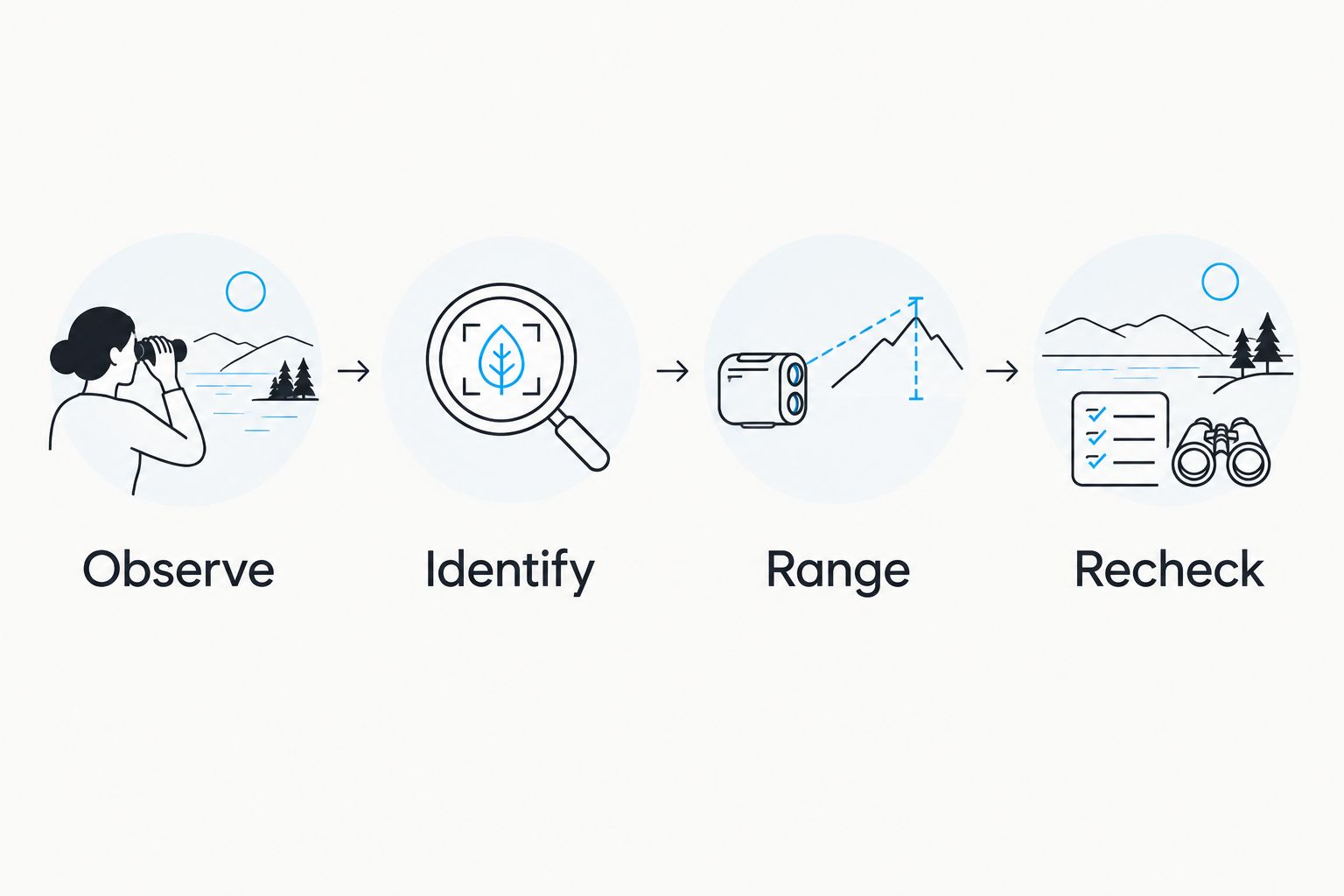
The useful sequence is Observe, Identify, Range, Recheck. Observe with a suitable device, identify what you are seeing, obtain a distance reading where appropriate, and recheck the animal and surroundings. If identification remains uncertain, a precise distance does not remove that uncertainty.
For your 2026 comparison, ask how the rangefinding function is operated and displayed on each exact model. Keep that question separate from thermal image quality. A scope can satisfy one requirement without settling the other.
Check rifle fit before choosing accessories
A scope that suits your viewing requirements still needs the correct mounting arrangement. Confirm the scope's mounting dimensions and the rifle's mounting interface before selecting rings or a mount. Similar-looking accessories are not proof of compatibility.
A mount labelled 30 mm describes a mounting dimension; it is not a universal compatibility statement. Ring height, available clearance, mounting position and access to controls also need checking. Do not infer compatibility from a product photograph alone.
Use this order when planning the setup:
- Confirm the exact scope model and its mounting requirements.
- Confirm the rifle's base or rail arrangement.
- Check clearance and the required shooting position.
- Check access to focus, controls and battery components.
- Follow the relevant installation and operating instructions.
Avoid buying an accessory first and forcing the scope choice around it. The optic, mount and rifle need to work as a system, and an accessory name cannot establish that by itself.
Plan observation and power as part of the purchase
A separate handheld thermal device lets you observe without using the rifle-mounted scope as a scanning tool. It also separates the search task from the aiming task. That distinction deserves space in your buying plan, not an afterthought after the scope arrives.
A handheld adds another device to carry, charge and operate. That is the practical trade-off. Choose its viewing characteristics for observation rather than assuming it must duplicate every specification of the riflescope.
For power, check the exact battery arrangement and the operating instructions for each model. Confirm what is supplied and what additional components your intended setup requires. Do not assume that batteries or chargers associated with another thermal product are compatible.
Goingdark's Pulsar thermal-scope selection should be assessed alongside your observation needs. Buying the scope alone makes sense only when the rest of your workflow is already covered; adding equipment without a defined role creates unnecessary complexity.
Which Pulsar thermal scope should you choose?
Start with the Pulsar Thermion 2 LRF XL60, then compare the Pulsar Thermion 2 LRF XP60 against the same written requirements. That is the default route for an undecided buyer—not an instruction to buy the first model regardless of fit.
If one model clearly meets your required native detail, field of view and mounting arrangement, choose that configuration. If neither answers those questions, keep comparing rather than substituting maximum zoom or detection distance for suitability.
For a 2026 purchase, keep three decisions separate: the scope you aim through, the device you observe with and the accessories each actually requires. Goingdark serves buyers across thermal and night vision categories, but the category label alone does not settle which equipment belongs in your setup.
FAQ
What's the best Pulsar thermal scope for Australian hunting?
The Pulsar Thermion 2 LRF XL60 and Pulsar Thermion 2 LRF XP60 are the two models in this shortlist. Choose between them using native image detail, field of view, mounting requirements and your observation workflow rather than assuming a universal winner.
Is the Pulsar Thermion 2 LRF XL60 better than the XP60?
The XL60 model name alone does not establish that it is better for your hunting than the XP60. Compare the exact detector, magnification, field-of-view and mounting specifications against the same requirements.
Does a thermal scope's detection distance tell me how far I can identify an animal?
No, detection distance is not identification distance. Seeing a heat source does not establish its species, the surrounding situation or a suitable shooting opportunity.
Does digital zoom improve thermal sensor resolution?
No, digital zoom enlarges part of the captured image without adding detector detail. Check the base image and native resolution before relying on maximum magnification.
Do I need a handheld thermal monocular as well as a scope?
A handheld thermal device is appropriate when you need to scan without pointing a rifle-mounted optic around the landscape. It adds another device to carry and manage, so give it a defined observation role.
Will any 30 mm scope mount fit my Pulsar thermal scope?
No, a 30 mm label alone does not establish compatibility. Confirm the exact scope dimensions, rifle interface, clearance and mounting requirements before choosing an accessory.
Does a laser rangefinder identify the animal?
No, a laser rangefinder measures distance to a reflecting surface. Identification and checking the surroundings remain separate tasks.
What should I check before ordering a Pulsar thermal scope in Australia in 2026?
Check the exact model specification, rifle mounting requirements, power arrangement and intended observation workflow. Goingdark sells thermal and night vision optics for Australian hunters, so keep the scope and any supporting equipment matched to their specific roles.
One last thing
A larger image is not necessarily a more informative image. Digital enlargement can make a heat source fill the display while removing the surrounding context you need to interpret it. Before deciding between the Pulsar Thermion 2 LRF XL60 and XP60, write down what you need visible at base magnification; that requirement is more useful than a maximum-zoom headline.
Share:
Best lightweight thermal monoculars for walking hunts in 2026
Thermal binoculars in Australia: thermal-only or multispectral?