
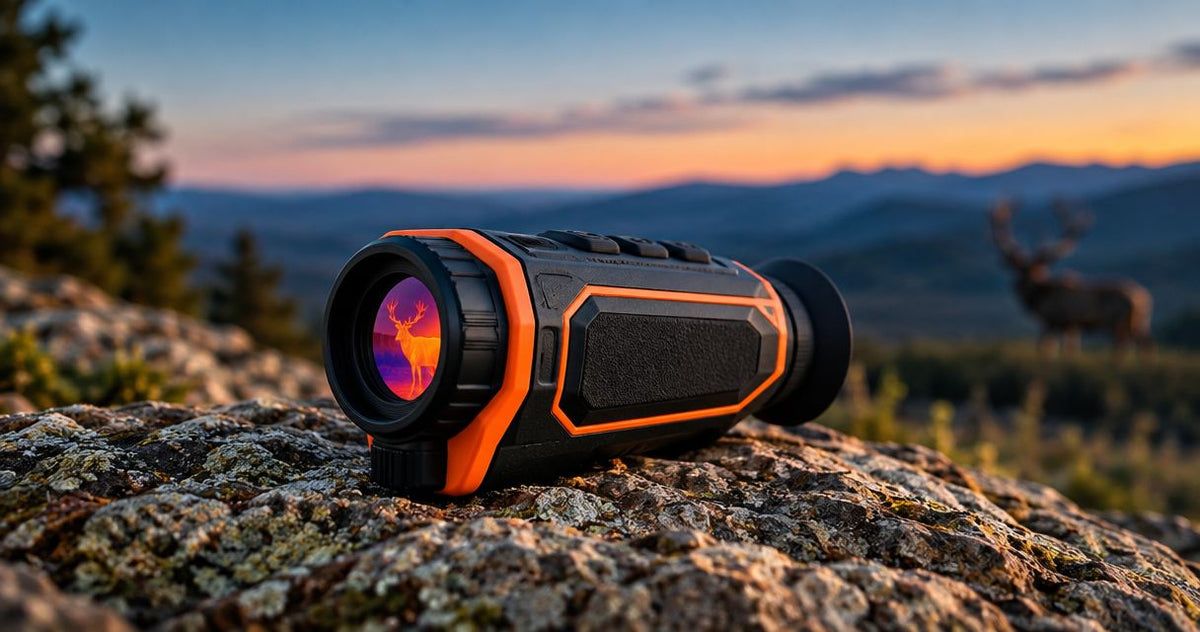
Best overall for detector detail and ranging: HIKMICRO CONDOR 2.0 CQ50L; best middle-resolution option: HIKMICRO LYNX LH25 3.0; best entry-resolution option: HIKMICRO LYNX LE10 3.0. This 2026 GoingDark thermal monocular guide explains which specification differences matter when you choose a handheld spotter for Australian hunting.
- GoingDark’s thermal monocular shortlist favours HIKMICRO CONDOR 2.0 CQ50L for hunters prioritising detector detail and integrated ranging.
- HIKMICRO LYNX LH25 3.0 suits buyers choosing a 384 × 288-pixel detector rather than the entry-resolution alternative.
- HIKMICRO LYNX LE10 3.0 suits buyers deliberately choosing a 256 × 192-pixel thermal spotter.
- Compare field of view, native magnification and battery arrangements before choosing; detection does not establish animal identification.
Why this matters
A thermal monocular is a handheld observation device, not a substitute for positively identifying an animal. It shows thermal contrast so you can find areas that deserve closer examination. A visible heat source alone does not establish species or a safe shooting opportunity.
GoingDark’s 2026 thermal monocular recommendations separate detector resolution from the rest of the buying decision. More detector pixels provide more sampling points, but lens choice, native magnification, focus and conditions also affect what you see. Choose the complete viewing system, not the biggest number in its name.
What makes the best thermal monocular?
Use these criteria to compare the shortlist before deciding which model deserves your money:
- Detector resolution: compare the thermal detector, not just the eyepiece display. They perform different jobs.
- Field of view: check how much ground you can see at native magnification. Match that view to your hunting terrain.
- Native magnification: distinguish optical framing from digital enlargement. Enlarging an image does not add captured detector detail.
- Rangefinding: choose an integrated laser rangefinder when measuring distance is part of your observation routine.
- Power and handling: check the battery arrangement, controls, focus adjustment and carry method against how you actually hunt.
For a 2026 purchase, ask for these specifications for the exact model and generation. A familiar series name is not enough to establish that two devices share the same detector, lens or battery system.
Best thermal monoculars at a glance
The shortlist ranks three different buying positions. The CONDOR takes the detail-and-ranging slot; the two LYNX models separate the middle and entry detector resolutions.
| Thermal monocular | Best for | Listed specification | Standout distinction | Key limitation |
|---|---|---|---|---|
| HIKMICRO CONDOR 2.0 CQ50L | Detail and integrated ranging | 640-pixel detector designation; 50 mm lens; LRF | Combines the highest listed detector class here with ranging | Lens diameter alone does not establish field of view |
| HIKMICRO LYNX LH25 3.0 | Middle-resolution observation | 384 × 288-pixel detector | Middle detector resolution within this shortlist | Fewer detector sampling points than the CONDOR’s listed class |
| HIKMICRO LYNX LE10 3.0 | Entry-resolution observation | 256 × 192-pixel detector | A clearly defined lower-resolution option | Least detector detail capacity within this shortlist |
The HIKMICRO CONDOR 2.0 CQ50L is the default shortlist choice for hunters who want detector detail and integrated ranging together. That recommendation concerns its listed configuration, not an assumed identification distance or an unsupported field-test result.
1. HIKMICRO CONDOR 2.0 CQ50L: best for detail and ranging
The HIKMICRO CONDOR 2.0 CQ50L is a thermal monocular listed with a 640-pixel detector designation, a 50 mm lens and an integrated laser rangefinder. It takes the first position because this configuration combines the highest listed detector class in the shortlist with distance measurement.
Choose the HIKMICRO CONDOR 2.0 CQ50L when you want both capabilities in your handheld observer. Do not choose it solely because the lens is larger: lens diameter must be considered alongside detector dimensions, pixel pitch and native magnification to understand the resulting view.
HIKMICRO CONDOR 2.0 CQ50L pros:
- Its listed 640-pixel detector class provides the strongest resolution starting point in this comparison.
- The integrated LRF adds a distance-measurement function to handheld observation.
- Its explicit 50 mm lens specification gives you a concrete optical parameter to compare.
HIKMICRO CONDOR 2.0 CQ50L cons:
- Higher detector resolution does not, by itself, establish species identification at a particular distance.
- The 50 mm lens specification does not tell you whether its native view suits close vegetation or broad scanning.
Before ordering, compare native magnification and field of view with the ground you usually cover. Ask about battery changes and control access as well. A detailed image is useful only when the observation routine works for you.
Best for: hunters who specifically want detector detail and integrated ranging in the same thermal monocular.
Verdict: Buy the HIKMICRO CONDOR 2.0 CQ50L when detail and ranging are both purchase priorities.
2. HIKMICRO LYNX LH25 3.0: best for middle-resolution observation
The HIKMICRO LYNX LH25 3.0 is a thermal monocular with a listed 384 × 288-pixel detector. It occupies the middle-resolution position between the CONDOR’s 640-pixel designation and the LYNX LE10’s 256 × 192-pixel detector.
This is the model to examine when you want more detector sampling points than the entry-resolution option without making the top detector class your starting requirement. Keep that distinction narrow: detector resolution alone does not prove a better field of view, longer runtime or easier handling.
HIKMICRO LYNX LH25 3.0 pros:
- The 384 × 288-pixel detector offers more sampling points than the LYNX LE10 3.0.
- Its middle-resolution position gives you a clear alternative to both ends of this shortlist.
- The explicit detector dimensions make comparisons more useful than a vague image-quality label.
HIKMICRO LYNX LH25 3.0 cons:
- Its detector has fewer sampling points than the CONDOR’s listed 640-pixel class.
- Digital enlargement cannot replace detail that the detector did not capture.
Compare the HIKMICRO LYNX LH25 3.0 at native magnification before spending time on maximum digital zoom. Start with the un-enlarged image, adjust the eyepiece and objective focus correctly, then decide whether the available detail answers your observation needs.
A 384 × 288-pixel detector is not an automatic promise of sufficient animal detail. Distance, thermal contrast and the optical system still matter. Treat the model as a middle-resolution candidate, not a guaranteed identification solution.
Best for: buyers deliberately choosing the middle detector resolution in this comparison.
Verdict: Buy the HIKMICRO LYNX LH25 3.0 when a 384 × 288-pixel detector matches your observation requirements.
3. HIKMICRO LYNX LE10 3.0: best for entry-resolution observation
The HIKMICRO LYNX LE10 3.0 is a thermal monocular with a listed 256 × 192-pixel detector. It is the entry-resolution selection here, rather than a claimed lowest-cost or lightest-weight winner.
Choose this position deliberately. Finding a thermal contrast and examining fine animal detail are different demands. The HIKMICRO LYNX LE10 3.0 starts with fewer detector sampling points than the other shortlisted models, so accept that resolution trade-off before choosing it.
HIKMICRO LYNX LE10 3.0 pros:
- Its 256 × 192-pixel detector specification makes the resolution level explicit.
- It gives buyers a distinct entry-resolution option rather than another middle-resolution recommendation.
- Its handheld monocular format separates observation from a rifle-mounted optic.
HIKMICRO LYNX LE10 3.0 cons:
- It has the lowest listed detector resolution in this comparison.
- Digital zoom enlarges the available image without creating additional captured detail.
Do not select the HIKMICRO LYNX LE10 3.0 because you assume an entry-resolution model must be lighter, simpler or better suited to timber. Those are separate questions. Check the exact weight, native view and control arrangement against your requirements.
If detailed examination is the reason you are replacing an existing spotter, start with the higher-resolution candidates instead. Choosing another lower-resolution device without addressing the original limitation leaves the buying problem unresolved.
Best for: buyers who understand and accept the entry detector resolution for their observation task.
Verdict: Buy the HIKMICRO LYNX LE10 3.0 only when its lower-resolution position is a deliberate choice.
Match the specification to the hunt
Your 2026 shortlist should begin with what stops you seeing effectively, not with a brand hierarchy. Separate the decision into three practical requirements.
Wide scanning
When your priority is searching an area, compare field of view at native magnification. A larger view reduces how much of the scene sits outside the image, but it is not automatically the best choice for examining a distant heat source.
Detail assessment
When your priority is examining a heat source, compare detector resolution together with native magnification and focus. Do not judge detail from an enlarged promotional image alone. Ask whether comparison footage uses equivalent distances and clearly stated settings.
Distance measurement
When your observation routine needs a measured distance, check the rangefinding function separately from the thermal image. A distance reading answers how far away a return is; it does not establish what the animal is.
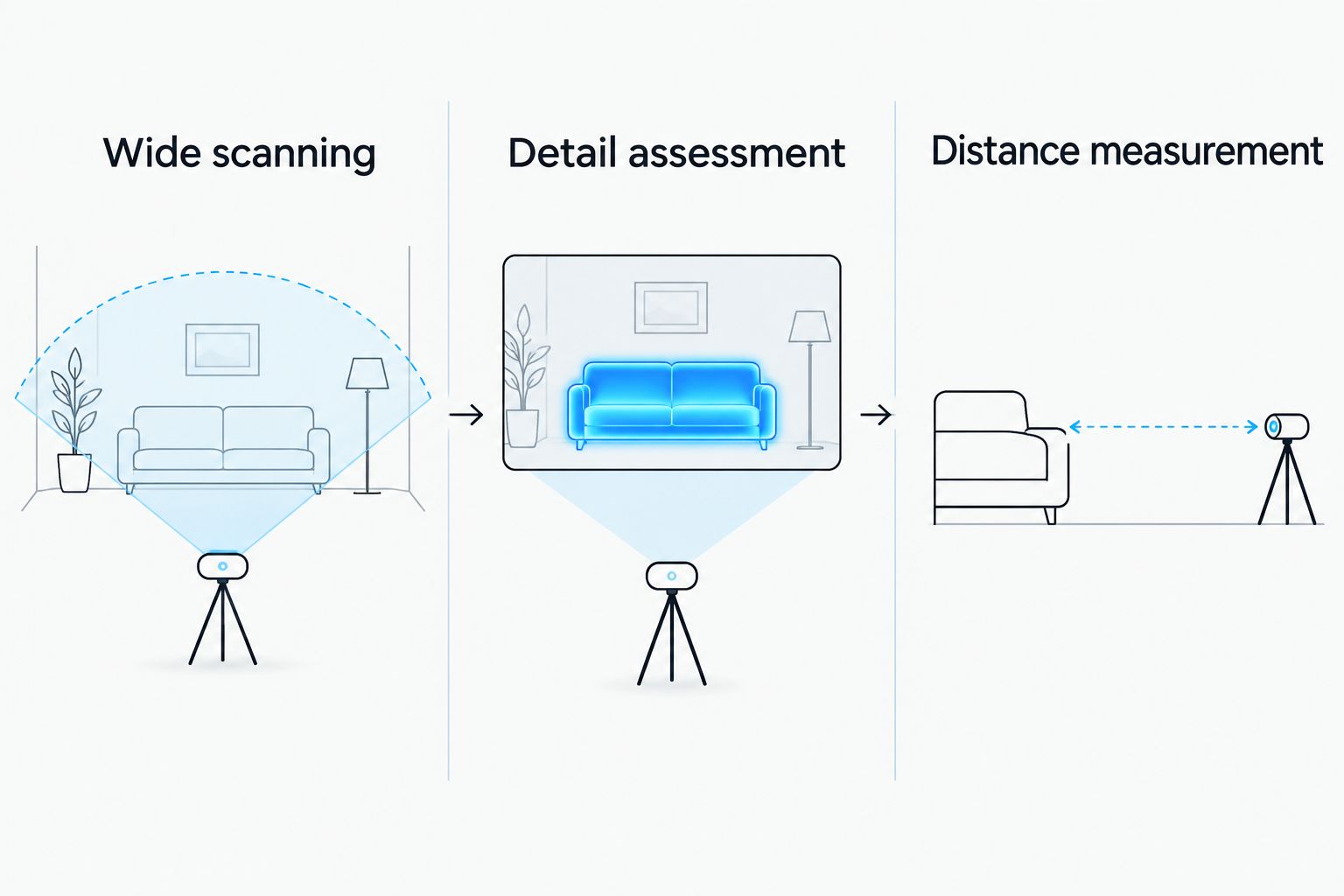
A monocular that suits your scanning pattern is a better purchase than one selected for an isolated specification. Keep identification separate from detection throughout the decision, including when comparing manufacturers’ distance claims.
Checks before you order
Confirm the exact model designation first. Then check these ownership details rather than assuming every device in a series works the same way:
- Battery arrangement: establish whether batteries are removable, how charging works and which replacements are compatible.
- Carry method: check the supplied case or strap and whether you can access the device without unnecessary handling.
- Controls: check button layout, focus adjustment and operation with your usual gloves.
- Viewing comfort: check the eyepiece adjustment and how naturally you can maintain a stable image.
- Recording: confirm the exact recording and app functions only if those functions affect your decision.
Give GoingDark your terrain, usual observation task and the limitation you want to fix. That produces a more useful thermal monocular discussion than asking which model is simply “the best”.
How the shortlist is ranked
The 2026 ranking prioritises the listed detector specifications and integrated ranging, then assigns each model a distinct buying role. It is a specification-based shortlist, not a claim of comparative hands-on testing.
The CONDOR leads for detail and ranging together. The LH25 occupies the middle-resolution position; the LE10 occupies the entry-resolution position. Field of view, handling and battery suitability remain checks for your exact purchase.
Which thermal monocular should you choose?
Start with the HIKMICRO CONDOR 2.0 CQ50L if you want the strongest listed detector class here and integrated ranging. Choose the HIKMICRO LYNX LH25 3.0 for the middle-resolution position, or the HIKMICRO LYNX LE10 3.0 only after accepting its lower detector resolution.
For your 2026 purchase, GoingDark’s useful starting point is the task, then the specification. If you cannot explain why you need ranging or more detector detail, settle those questions before selecting the model.
FAQ
What is the best thermal monocular on this shortlist?
The HIKMICRO CONDOR 2.0 CQ50L is the default choice for hunters prioritising detector detail and integrated ranging. Its listing specifies a 640-pixel detector designation, a 50 mm lens and an LRF; check native magnification and field of view before ordering.
Is a 384 × 288-pixel thermal monocular better than a 256 × 192-pixel model?
A 384 × 288-pixel detector has more sampling points than a 256 × 192-pixel detector. That supports a higher-resolution starting image, but lens choice, focus and thermal contrast also affect the usable result.
Does a larger thermal monocular lens always give a better view?
A larger lens is not automatically the better choice for your hunt. Compare lens diameter with detector dimensions, pixel pitch, native magnification and field of view rather than judging it alone.
Can a thermal monocular identify an animal at its stated detection distance?
A stated detection distance does not establish an identification distance. Detecting a thermal contrast and resolving enough detail to identify an animal are different tasks.
Do I need a laser rangefinder in a thermal monocular?
Choose an integrated laser rangefinder when distance measurement is part of your observation routine. The HIKMICRO CONDOR 2.0 CQ50L includes an LRF, but a range reading does not identify the animal.
Does digital zoom add detail to a thermal image?
Digital zoom enlarges the existing image rather than adding captured detector detail. Compare the native image first, then assess whether enlargement helps you examine what is already visible.
What should I tell GoingDark before choosing a thermal monocular?
Tell GoingDark your terrain, observation priorities and the limitation you want to fix. Include whether you need integrated ranging and which battery and handling arrangements matter to you.
One last thing
Do not compare products by display resolution while ignoring detector resolution. A high-resolution eyepiece can display menus and enlarged imagery, but it cannot recover thermal detail the detector never captured. Put the detector specification beside every shortlisted model before making your final choice.
Share:
Best night vision binoculars for hunting in Australia 2026
Best night vision goggles for hunting in Australia 2026