
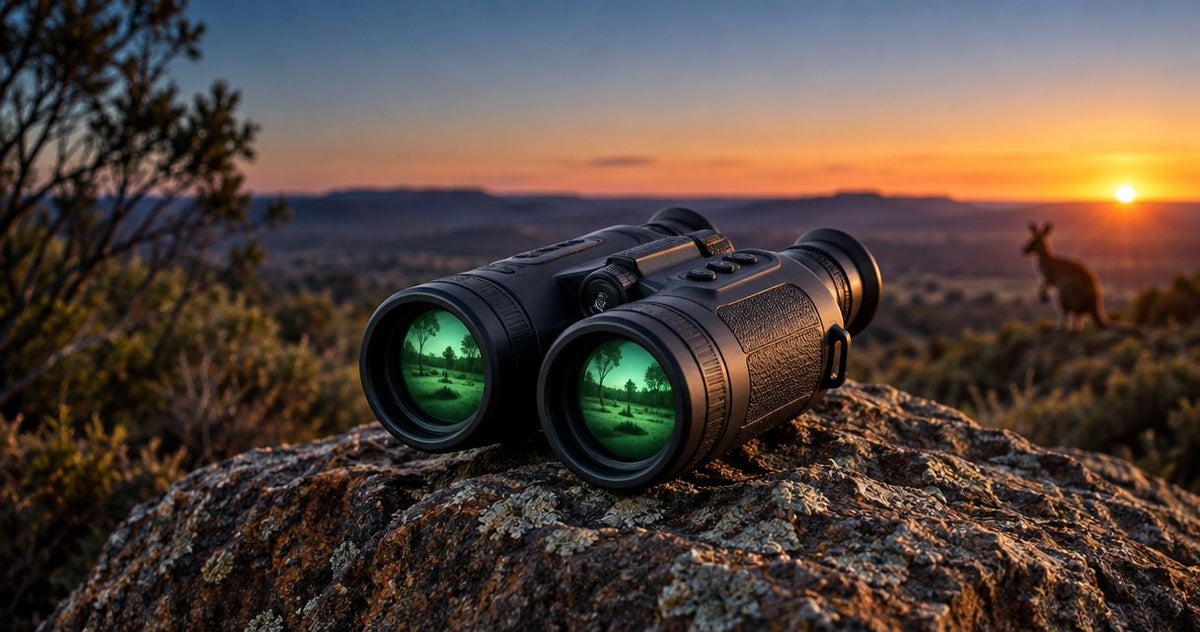
Best overall shortlist: HIKMICRO HABROK HQ35L Thermal Fusion Binoculars. Best for thermal sensor resolution: HIKMICRO HABROK-PRO HX60LS4K. Best for a 940 nm IR configuration: HIKMICRO HABROK HQ35LN. These night vision binoculars suit different observation priorities; this 2026 guide separates verified specifications from the details you should check before ordering.
- HIKMICRO HABROK HQ35L leads this night vision binoculars shortlist for its verified 640 × 512 thermal detector.
- HIKMICRO HABROK-PRO HX60LS4K suits buyers prioritising its 1280 × 1024 thermal detector and 60 mm lens.
- HIKMICRO HABROK HQ35LN suits hunters specifically choosing a 940 nm IR configuration.
- Thermal detection does not establish animal identity; assess image detail and surroundings separately.
Why this matters
Night vision binoculars are not all the same technology. Digital night vision forms an image from available visible and near-infrared light; thermal imaging detects emitted thermal radiation. Multispectral binoculars bring different imaging channels into one observation device.
GoingDark's night vision binoculars shortlist suits hunters comparing thermal detection with digital night viewing. Start with the job you need the binoculars to do, rather than choosing the largest specification on the page. You can explore the wider optics range at GoingDark.
For an Australian hunting setup in 2026, decide whether your main problem is finding animals, examining visible detail or observing comfortably through both eyes. A device that answers one of those needs does not automatically answer the others. None of the specifications below establishes a guaranteed identification distance.
What makes the best night vision binoculars?
Use these criteria before comparing the models:
- Imaging channels: Choose thermal detection, digital night viewing or a multispectral combination according to the observation task.
- Thermal resolution: Compare detector pixels separately from display resolution and digital camera resolution. They describe different parts of the device.
- Lens and field of view: Check how much ground the binoculars show at base magnification. Lens focal length alone does not establish usable viewing width.
- IR configuration: Match the illuminator wavelength to the exact model. An 850 nm configuration and a 940 nm configuration are not interchangeable buying descriptions.
- Viewing fit: Check eye spacing adjustment, eyecup fit, focusing controls and supported viewing positions before committing to extended observation.
- Complete setup: Confirm battery arrangements, included accessories and the functions of any rangefinder. Treat unlisted features as questions, not assumptions.
For your 2026 shortlist, give priority to specifications that answer your actual buying question. A larger detector matters when thermal image detail is the priority; it does not remove the need to check handling, illumination and the digital viewing channel.
Night vision binoculars at a glance
| Model | Best for | Verified standout specification | Key limitation |
|---|---|---|---|
| HIKMICRO HABROK HQ35L Thermal Fusion Binoculars | All-round thermal-led shortlist | 640 × 512 thermal detector; 12 µm pixel pitch | Detector resolution alone does not establish identification performance |
| HIKMICRO HABROK-PRO HX60LS4K | Prioritising thermal sensor resolution | 1280 × 1024 detector; 50 Hz; 60 mm thermal lens | Larger pixel dimensions do not establish field of view or handling suitability |
| HIKMICRO HABROK HQ35LN Multispectral LRF Binoculars | Choosing a 940 nm IR configuration | HQ35LN is identified as the 940 IR variant | IR wavelength alone does not establish night-image detail or useful viewing distance |
The table compares different buying priorities, not measured field-test results. The HQ35L recommendation refers specifically to the Thermal Fusion Binoculars listing with the stated 640 × 512 detector. Check the exact listing rather than transferring specifications between similarly named products.
1. HIKMICRO HABROK HQ35L: best for an all-round shortlist
The HIKMICRO HABROK HQ35L Thermal Fusion Binoculars provide a verified starting point for hunters comparing multispectral observation gear. The supplied product specification identifies a 640 × 512 thermal detector with 12 µm pixel pitch. Those figures describe the thermal sensor, not the resolution of every viewing channel.
Best for: Hunters who want a thermal-led binocular shortlist anchored in a clearly stated detector specification.
The HQ35L takes the default position here because its listed thermal specification gives you something concrete to compare. That is a narrower recommendation than declaring it the best in every paddock. You still need to establish whether its viewing width, controls and digital channel suit your observation routine.
HIKMICRO HABROK HQ35L pros:
- The 640 × 512 detector specification supports a direct thermal-resolution comparison.
- The stated 12 µm pixel pitch adds useful sensor information beyond a model name.
- The thermal-fusion binocular format is relevant to buyers seeking more than conventional optical binoculars.
HIKMICRO HABROK HQ35L cons:
- The detector figures do not establish a reliable animal-identification distance.
- The supplied specification does not settle battery endurance, viewing comfort or digital-channel performance.
Before ordering the HQ35L in 2026, ask for the complete specification for the exact listing. Confirm the illuminator configuration, base magnification, field of view and battery arrangement. Similar model names are not sufficient evidence that two listings have identical equipment.
Verdict: Buy the HIKMICRO HABROK HQ35L when its confirmed viewing and handling specifications match your observation needs.
2. HIKMICRO HABROK-PRO HX60LS4K: best for sensor resolution
The HIKMICRO HABROK-PRO HX60LS4K has the largest stated thermal detector in this comparison: 1280 × 1024 pixels. Its description also specifies a 50 Hz thermal detector, 60 mm thermal lens and 15 mK NETD, alongside a 4K imaging reference.
Best for: Hunters prioritising thermal detector resolution when comparing multispectral binoculars.
Keep those specifications separate. The 1280 × 1024 figure describes the thermal detector; the 4K reference should not be read as a 4K thermal detector. NETD describes thermal sensitivity under measurement conditions, not an identification guarantee.
HIKMICRO HABROK-PRO HX60LS4K pros:
- Its stated thermal detector has larger pixel dimensions than the HQ35L detector listed here.
- The 60 mm thermal lens specification makes the optical configuration explicit.
- The supplied 50 Hz and 15 mK figures provide additional comparison points beyond resolution.
HIKMICRO HABROK-PRO HX60LS4K cons:
- Resolution, lens size and NETD do not independently establish real-world identification performance.
- The supplied figures do not answer questions about carrying weight, viewing width or operating endurance.
Choose the HX60LS4K because you have identified a need for its thermal specification, not because the model name contains the largest numbers. Ask for field of view at base magnification and the full digital-channel specification. Those details determine whether the configuration suits your terrain and observation style.
For a 2026 comparison, assess the complete imaging system rather than treating detector resolution as the finishing line. A detailed image is useful only when you can find, follow and assess the subject within the scene.
Verdict: Buy the HIKMICRO HABROK-PRO HX60LS4K when thermal sensor resolution is your clear priority and the remaining specifications fit your use.
3. HIKMICRO HABROK HQ35LN: best for a 940 nm IR setup
The HIKMICRO HABROK HQ35LN Multispectral LRF Binoculars are the wavelength-specific choice in this shortlist. The supplied description distinguishes HQ35L as 850 IR and HQ35LN as 940 IR. That makes the exact suffix relevant to your buying decision.
Best for: Hunters who specifically want the HQ35LN's 940 nm IR configuration.
A 940 nm illuminator generally produces less visible red glow than an 850 nm illuminator. That does not make the complete setup invisible, guarantee an animal's response or establish equivalent image performance. Compare the image delivered by the exact device and illuminator combination.
HIKMICRO HABROK HQ35LN pros:
- The supplied description explicitly identifies the 940 IR variant.
- The multispectral format addresses buyers comparing more than one imaging channel.
- The product title identifies an LRF-equipped configuration for buyers seeking a rangefinder.
HIKMICRO HABROK HQ35LN cons:
- A 940 nm wavelength specification does not establish effective observation distance.
- The supplied description does not justify copying the HQ35L detector specification across to the HQ35LN.
Confirm the detector, digital channel, rangefinder specification and included illumination equipment for the HQ35LN itself. Do not infer them from another HABROK model. This is particularly important when comparing product pages that share photographs or abbreviated descriptions.
Verdict: Buy the HIKMICRO HABROK HQ35LN when 940 nm IR is a deliberate requirement; otherwise, hold until you have compared the complete configurations.
Compare the exact product listings
GoingDark lists the following binoculars with the model names used in this guide. Match the title to the specification you are comparing, especially when distinguishing the HQ35L Thermal Fusion listing from other HABROK listings.


Match the imaging channel to the job
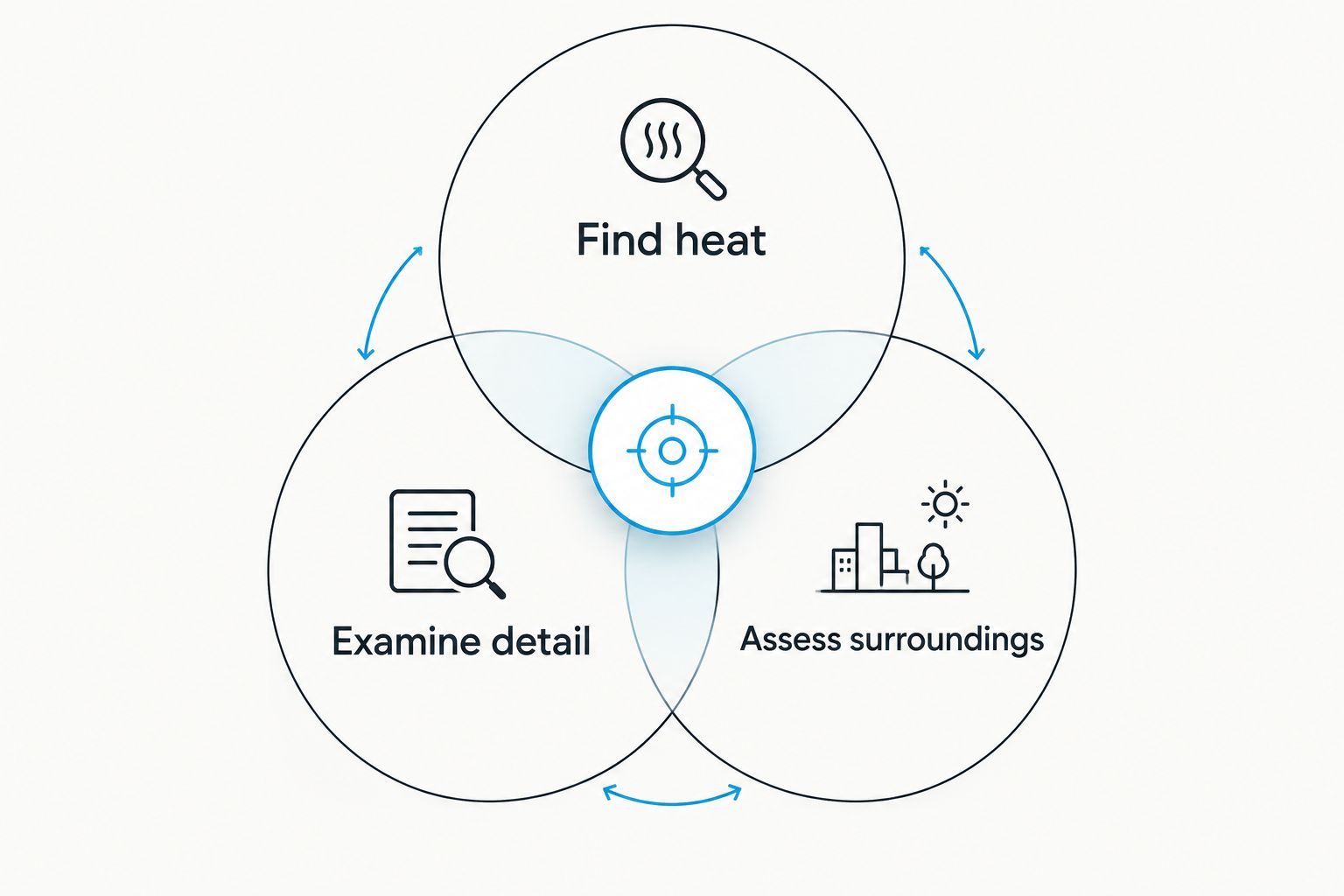
Think about night observation as three separate tasks: Find heat, Examine detail and Assess surroundings. Thermal imaging helps locate heat signatures; a digital channel provides a different view of reflected light. Neither replaces the need to establish what you are observing and what surrounds it.
Digital night vision depends on available light or suitable IR illumination. Thermal imaging does not need an IR torch to detect emitted thermal radiation. That distinction explains why a multispectral device is not simply a digital binocular with a different colour palette.
When comparing illumination, look beyond wavelength. Beam alignment, focus, nearby reflective objects and the device's own imaging system affect the usable picture. Avoid treating a brighter image as automatic proof of better identification.
Also separate observation equipment from aiming equipment. Binoculars are observation devices, not a substitute for a properly configured sight. A rangefinder reading supplies distance information; it does not confirm species, identity or a suitable background.
How the shortlist was ranked
This GoingDark guide ranks the models by the supplied product specifications and distinct buying uses, not claimed hands-on testing. The HQ35L leads as the thermal-led comparison starting point; the HX60LS4K earns the resolution slot; the HQ35LN earns the wavelength-specific slot.
The 2026 ranking does not award positions for unverified battery life, weight, detection distance or weather performance. Those details belong in your final specification check. No model wins merely because another model's description is less complete.
Which night vision binoculars should you choose?
Start with the HIKMICRO HABROK HQ35L if you need a default comparison point. Its verified 640 × 512 thermal detector gives you a clear baseline, then you can check the viewing and handling details that determine suitability.
Choose the HIKMICRO HABROK-PRO HX60LS4K when its 1280 × 1024 detector is central to your decision. Choose the HIKMICRO HABROK HQ35LN when you specifically require the 940 nm IR configuration. Do not pay for a specification you cannot connect to an observation need.
Before ordering from GoingDark, confirm the exact model suffix, imaging channels, field of view, battery arrangement and included accessories. Get those answers against the selected listing, not against the HABROK family name.
FAQ
What are the best night vision binoculars for hunting in Australia in 2026?
The HIKMICRO HABROK HQ35L is this guide's default thermal-led shortlist choice, the HABROK-PRO HX60LS4K suits thermal-resolution priorities, and the HQ35LN suits a 940 nm IR requirement. Confirm the complete specifications and viewing fit before choosing.
Are thermal binoculars the same as digital night vision binoculars?
No, thermal binoculars detect emitted thermal radiation, while digital night vision forms an image from available visible and near-infrared light. Multispectral binoculars combine different imaging channels in one observation device.
Is the HIKMICRO HABROK-PRO HX60LS4K a 4K thermal binocular?
The supplied HX60LS4K specification identifies a 1280 × 1024 thermal detector, not a 4K thermal detector. Keep the separate 4K imaging reference distinct from the thermal sensor specification.
Should I choose 850 nm or 940 nm IR for night vision?
Choose the wavelength supported by the exact device and suited to your illumination priorities. A 940 nm illuminator generally has less visible red glow, but wavelength alone does not establish image detail or useful viewing distance.
Does thermal detection distance tell me how far away I can identify an animal?
No, detection distance does not establish identification distance. Identification requires enough usable detail to establish what you are observing, rather than merely detecting a heat signature.
Do thermal binoculars need an IR illuminator?
Thermal imaging does not need an IR illuminator to detect emitted thermal radiation. A separate digital night vision channel depends on available light or suitable IR illumination.
Can I assume all HABROK HQ35 models have the same specifications?
No, compare the complete specification for the exact model and listing. The supplied descriptions distinguish HQ35L and HQ35LN illumination configurations, and specifications should not be transferred between them without confirmation.
One last thing
The smallest part of the model name can change the buying decision. The supplied HABROK descriptions distinguish HQ35L's 850 IR configuration from HQ35LN's 940 IR configuration. Save the exact product title alongside your specification notes; a screenshot labelled only “HABROK binoculars” loses that distinction.
Share:
Thermal monoculars for hunting in timber: what to prioritise
Best thermal monoculars for hunting in 2026