
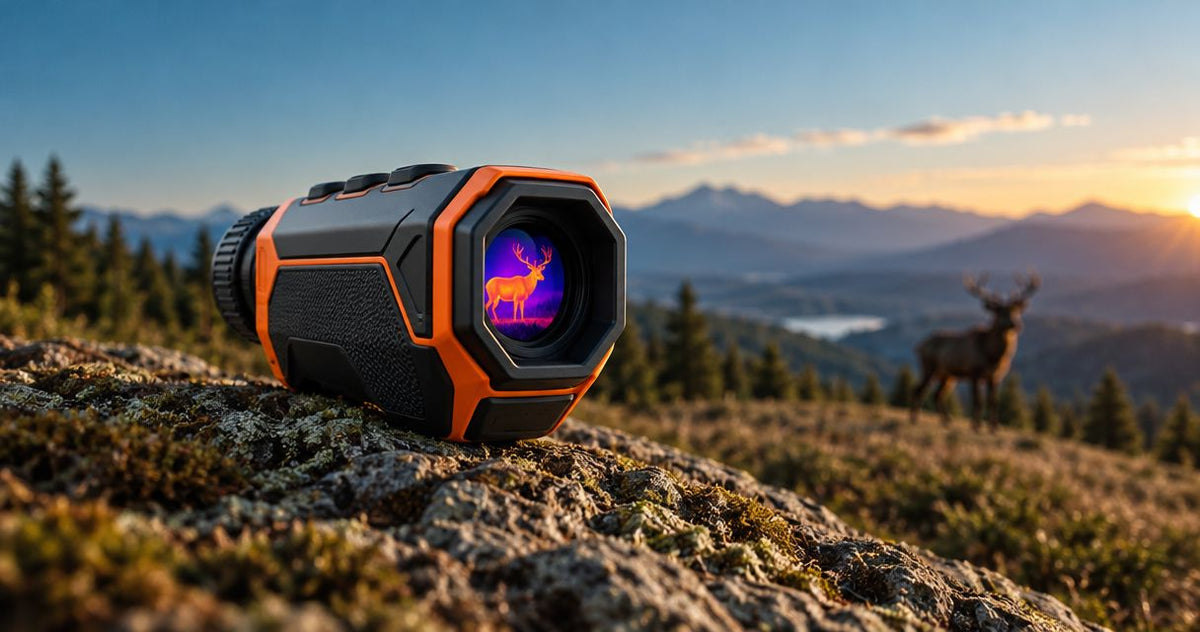
Best for Pulsar buyers: Pulsar Thermion 2 LRF XL60. Best for Nocpix buyers: Nocpix ACE H50R LRF. These are the two rangefinding thermal scope models to compare in 2026 if you want thermal aiming and laser ranging in the same optic; choose on image usability, ranging controls and rifle fit, not the longest distance claim.
- Pulsar Thermion 2 LRF XL60 suits hunters specifically shopping for a Pulsar rangefinding thermal scope.
- Nocpix ACE H50R LRF is the alternative for hunters comparing Nocpix thermal rifle scopes.
- GoingDark’s rangefinding thermal scope shortlist separates thermal aiming from handheld spotting and digital night vision.
- A laser distance reading does not establish animal identification or a safe background.
Why this matters
A rangefinding thermal scope combines two different jobs: showing thermal contrast and measuring distance. Neither job replaces the other. A clear distance reading tells you how far away the measured surface is, not what the animal is or what lies beyond it.
For your 2026 shortlist, GoingDark has both thermal and night vision optics, so check the imaging category before comparing model names. An LRF label means laser rangefinding; it does not mean the device is thermal, and a handheld thermal rangefinder is not a rifle scope.
GoingDark’s rangefinding thermal scope shortlist suits Australian hunters who want to compare rifle-mounted thermal aiming with integrated laser ranging. The useful buying question is whether those functions work together in a setup you can operate confidently.
What makes the best rangefinding thermal scope?
Use these six criteria before choosing a brand. They separate useful capability from specifications that look impressive without explaining the buying trade-off.
- Usable thermal detail: Compare native sensor resolution, thermal sensitivity, focus and the displayed image together. Display resolution alone does not describe the detail captured by the sensor.
- Field of view: Choose a view that suits your country and scanning needs. Strong magnification is a compromise when it leaves too little surrounding ground visible.
- Laser ranging controls: Check how you start a reading, where the result appears and whether operating the rangefinder interrupts your view.
- Rifle fit: Confirm mounting requirements, eye relief, recoil suitability and clearance for the exact scope and rifle combination.
- Power management: Check battery type, replacement procedure and the manufacturer’s stated operating conditions. A runtime claim needs context.
- Ballistic functions: Treat range measurement and ballistic calculation as separate features. Confirm what the exact model supports rather than assuming LRF includes both.
A sensible comparison records these details side by side. Do not award an overall win because one specification is larger, and do not transfer specifications between similarly named models.
Rangefinding thermal scopes at a glance
This 2026 shortlist gives each scope a distinct buyer slot. The order is a comparison starting point, not a claim that one model has beaten the other in field testing.
| Scope | Best for | Relevant feature | Key limitation to assess |
|---|---|---|---|
| Pulsar Thermion 2 LRF XL60 thermal rifle scope | Hunters specifically choosing a Pulsar LRF thermal scope | Thermal rifle scope with integrated laser rangefinding | Whether the exact optical view, controls and mounting requirements suit your rifle |
| Nocpix ACE H50R LRF thermal rifle scope | Hunters specifically comparing the Nocpix ACE LRF option | Thermal rifle scope with integrated laser rangefinding | Whether the exact ranging workflow, image presentation and power arrangement suit your use |
Both entries belong in the rifle-mounted thermal category. Neither should be substituted with a digital night vision scope or a handheld rangefinding monocular without recognising that you are changing the setup, not merely changing brands.
1. Pulsar Thermion 2 LRF XL60: best for Pulsar-focused buyers
The Pulsar Thermion 2 LRF XL60 is the relevant starting point if you want a Pulsar thermal rifle scope with laser rangefinding. It puts thermal aiming and distance measurement in the same optic. That combination suits buyers who want to assess an integrated setup rather than a separate rangefinding device.
The buying decision still depends on the exact model. Familiarity with the Pulsar name is a reason to shortlist the Thermion, not proof that its magnification, controls or mounting arrangement suit your rifle.
Pulsar Thermion 2 LRF XL60 pros:
- Thermal aiming and laser ranging are combined in one optic.
- The product is a rifle scope rather than a handheld observation device.
- It provides a clearly defined Pulsar option for an LRF thermal shortlist.
Pulsar Thermion 2 LRF XL60 cons and trade-offs:
- A rifle-mounted optic is not a substitute for an independent handheld spotter.
- Integrated ranging does not remove the need for positive identification.
- The model name alone does not establish suitable eye relief, mounting clearance or recoil compatibility.
Before choosing, check the full optical specification, the ranging procedure and the battery arrangement. Ask how the range readout sits within the view and whether you can operate the relevant controls comfortably without changing your normal viewing position.
Best for: Hunters who have deliberately narrowed their search to a Pulsar rangefinding thermal rifle scope.
Verdict: Hold until the exact rifle fit and viewing requirements are confirmed; buy only when both match.
2. Nocpix ACE H50R LRF: best for Nocpix-focused buyers
The Nocpix ACE H50R LRF is the Nocpix option in this thermal rifle scope shortlist. Its category combines thermal aiming with laser rangefinding. Compare it as a complete rifle-mounted system rather than treating the rangefinder as the deciding feature on its own.
The Nocpix ACE H50R LRF also needs to be distinguished from other ACE models. A shared family name does not establish identical ranging features, sensor specifications or battery arrangements.
Nocpix ACE H50R LRF pros:
- Thermal aiming and laser rangefinding sit within the same scope.
- It gives Nocpix buyers a specific LRF model to investigate.
- It can be compared directly with another integrated thermal LRF rifle scope without mixing imaging categories.
Nocpix ACE H50R LRF cons and trade-offs:
- It does not replace a separate observation device for scanning without directing the rifle.
- A valid laser reading does not establish sufficient thermal identification detail.
- Specifications from another Nocpix ACE model cannot be assumed to apply.
Prioritise the image at the magnification you expect to use, not just the maximum zoom setting. Then check how the ranging control, focus and power controls fit your normal handling. Features matter only when you can use them without losing track of the scene.
Best for: Hunters specifically considering the Nocpix ACE range and wanting an integrated LRF thermal scope.
Verdict: Hold until the exact model’s controls, image and mounting requirements match your setup.
Read the thermal specifications without mixing them up
For a 2026 comparison, keep sensor resolution, display resolution and magnification in separate columns. They describe different parts of the image chain. A high-resolution display cannot restore detail the thermal sensor did not capture.
Native sensor formats include 384 × 288 pixels, 640 × 480 pixels and 1280 × 1024 pixels. These are examples of thermal resolution formats, not specifications assigned here to either shortlisted scope. Read the exact model’s specification before making that comparison.
Digital magnification enlarges the captured image rather than adding new sensor information. Higher native resolution provides more captured image information, but lens choice, field of view, focus and thermal contrast still affect what you can interpret.
NETD describes thermal sensitivity; a lower stated value indicates sensitivity to smaller temperature differences under the stated test conditions. It is not a standalone promise of identification performance. Compare the conditions behind the specification as well as the figure.
Choose the image you can interpret at your working magnification, not the largest number on the specification sheet. That principle applies to both shortlisted scopes without assuming either has a particular sensor or sensitivity rating.
Distance measurement is not identification
Keep four checks separate when assessing a rangefinding thermal scope. Each answers a different question, and passing one does not automatically satisfy the next.
- Thermal image: Can you see the relevant subject clearly enough to assess it?
- Distance reading: Has the rangefinder measured the intended subject rather than something nearby?
- Identification: Can you positively establish what the subject is?
- Safe background: Can you establish what is beyond the subject?
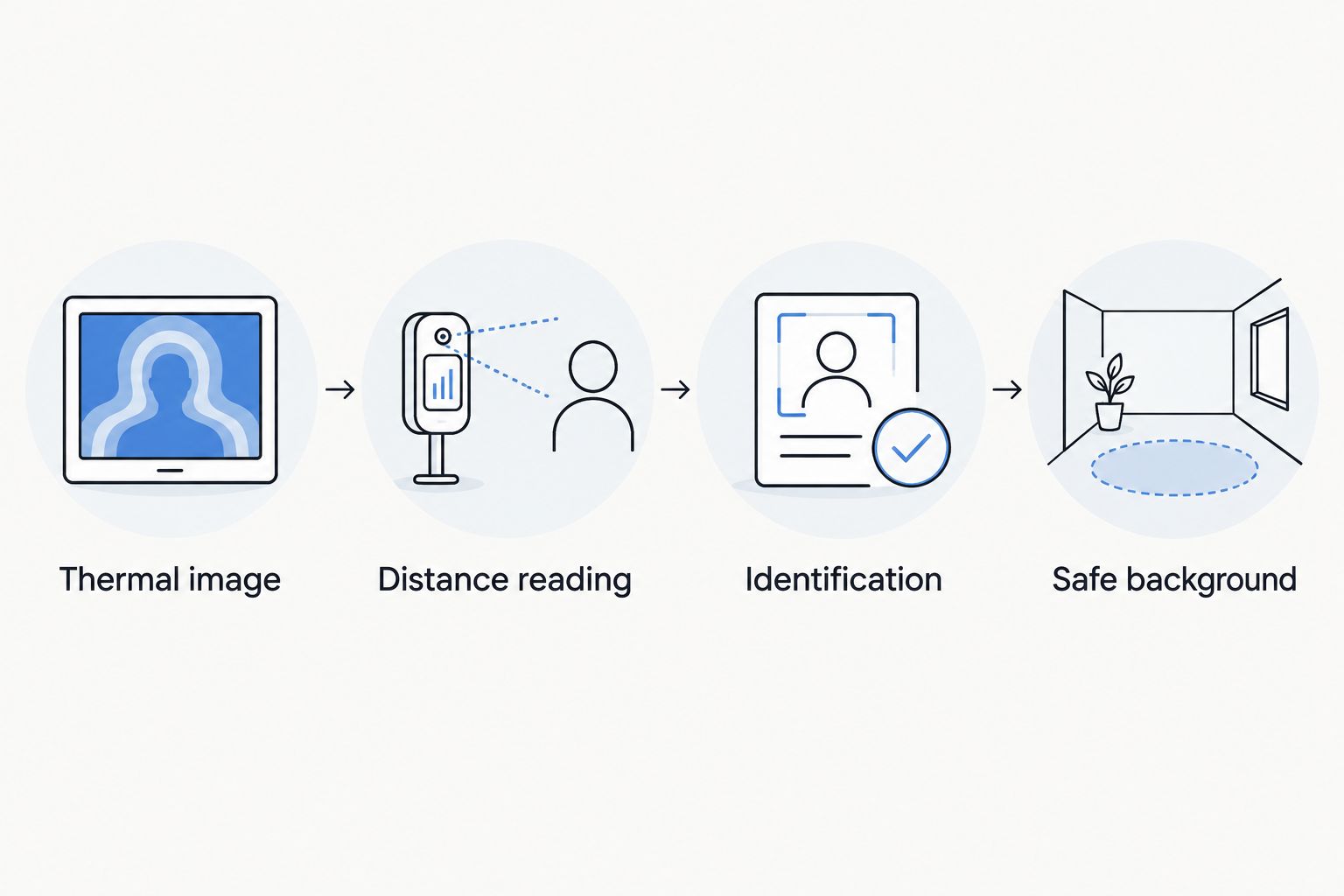
An advertised detection distance describes detecting a thermal subject under specified conditions. It is not an identification distance. Likewise, a rangefinder’s maximum measurement distance is not a statement about the scope’s usable identification detail.
Vegetation, intervening objects and the surface being measured affect the ranging task. Check the manufacturer’s guidance on measurement conditions and use the reading as one piece of information, not an instruction to proceed.
Check rifle fit before choosing extra features
For a 2026 purchase, establish physical compatibility before comparing recording functions or app features. A scope that does not fit your rifle and viewing position is the wrong choice regardless of its feature list.
Confirm these points for the exact model:
- Mounting requirements: Ring or mount dimensions, rail compatibility and required clearance.
- Eye relief: The specified viewing distance and whether your normal position accommodates it.
- Recoil suitability: The manufacturer’s stated rating and any restrictions relevant to your setup.
- Control access: Whether focus, ranging and power controls remain accessible once mounted.
- Power access: Whether you can follow the battery replacement procedure with the optic installed.
Do not infer compatibility from a mount’s appearance or from another scope in the same range. Keep the scope model and mount model together when asking GoingDark about a proposed combination.
A practical enquiry names your rifle, the shortlisted scope and the intended mounting arrangement. That gives the retailer a specific combination to assess instead of a broad request for the “best thermal”.
Is integrated ranging the right setup for you?
Integrated ranging suits a buyer who wants distance measurement available within the aiming optic. Separate observation gear serves a different purpose: it lets you scan without using the rifle-mounted scope as your general viewing device.
| Setup | Best for | Practical advantage | Practical drawback |
|---|---|---|---|
| Integrated LRF thermal scope | Buyers prioritising ranging within the aiming optic | Distance measurement and thermal aiming are combined | It does not provide an independent observation device |
| Thermal scope with separate ranging device | Buyers who prefer separate tools | Ranging equipment is independent of the aiming optic | You must manage another device and associate its reading with the correct subject |
| Thermal scope with handheld thermal spotter | Buyers prioritising independent scanning | Observation does not require looking through the rifle-mounted scope | A spotter does not provide laser ranging unless the exact model includes it |
Best for integrated operation: The two shortlisted LRF thermal rifle scopes. Best for independent observation: A separate handheld spotter, selected on its own requirements.
These arrangements are not interchangeable upgrades. Decide which job needs improving before adding another device, and avoid assuming that a handheld thermal automatically includes a rangefinder.
How the shortlist is ranked
The 2026 shortlist is organised by buyer preference: Pulsar first for Pulsar-focused buyers, then Nocpix for Nocpix-focused buyers. It is not a scored performance ranking or a field-test result.
The selection criteria are thermal usability, field of view, ranging controls, rifle fit, power management and confirmed ballistic functions. Use the same criteria for both scopes so brand familiarity does not conceal a mismatch.
Which rangefinding thermal scope should you choose?
Start with the Pulsar Thermion 2 LRF XL60 if Pulsar is your preferred brand; start with the Nocpix ACE H50R LRF if you are specifically shopping Nocpix. If you have no brand preference, compare the two against the same written requirements before selecting either.
For an undecided buyer, the default next move is a fit-and-function comparison, not a purchase based on maximum distance. Give GoingDark your rifle details, usual terrain and observation needs, then confirm the exact specifications that determine the choice.
FAQ
What is the best rangefinding thermal scope for hunting?
The Pulsar Thermion 2 LRF XL60 and Nocpix ACE H50R LRF are the two models on this shortlist. Choose between them on confirmed image requirements, ranging controls and rifle fit rather than treating either as a universal winner.
Does LRF mean a scope is thermal?
No, LRF means laser rangefinder, not thermal imaging. Digital night vision scopes and handheld optics can also include LRF, so check the imaging category separately.
Is the Pulsar Thermion 2 LRF XL60 better than the Nocpix ACE H50R LRF?
This shortlist does not establish an overall performance winner between the Pulsar Thermion 2 LRF XL60 and Nocpix ACE H50R LRF. Compare the exact models against the same optical, ranging, mounting and power requirements.
Does a laser rangefinder identify an animal?
No, a laser rangefinder measures distance to a surface. Positive animal identification and assessment of the background remain separate requirements.
Does an LRF thermal scope automatically include a ballistic calculator?
No, laser ranging and ballistic calculation are separate functions. Confirm the exact model’s features and configuration requirements before relying on either function.
Can I use detection distance as identification distance?
No, detection distance is not identification distance. Detecting a thermal subject does not establish enough detail to identify it positively.
Do I still need a thermal monocular with an LRF scope?
A thermal monocular provides independent observation, which a rifle-mounted LRF scope does not replace. Choose a handheld device if you need to scan without using the rifle-mounted optic.
One last thing
The distance number is often easier to read than the thermal subject is to identify. Do not let that clarity make the whole scene feel more certain than it is.
Before buying, write down what would stop you choosing each scope: unsuitable mounting, an unsuitable view, awkward controls or a power arrangement that does not fit your use. A shortlist becomes useful when it can rule something out.
Share:
Best multispectral night vision scopes for hunting in 2026
Best thermal clip-on devices for hunters in 2026