
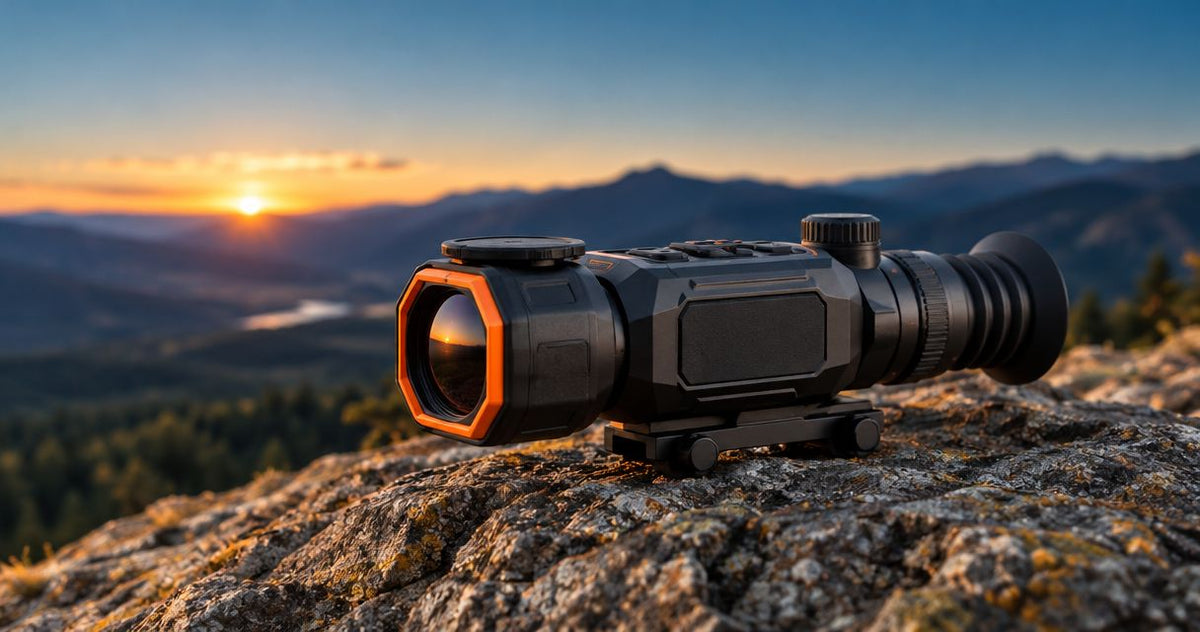
Best overall shortlist pick: Pulsar Thermion 2 LRF XL60. Best alternative for integrated ranging: Nocpix ACE H50R LRF. Best 384-class option to assess: Nocpix ACE L35. This 2026 long range thermal scope guide explains which buying decisions matter before you choose between them.
- The Pulsar Thermion 2 LRF XL60 leads this long range thermal scope shortlist for hunters prioritising integrated ranging.
- Compare the Nocpix ACE H50R LRF when an integrated laser rangefinder is central to your requirements.
- Assess the Nocpix ACE L35 as a 384-class alternative, not an assumed match for higher-resolution systems.
- Detection distance is not identification distance; digital zoom does not create additional sensor detail.
Why this matters
A distant heat signature is not enough information to identify an animal. A thermal scope must give you useful detail, while its ranging system answers a separate question: how far away is the object?
GoingDark matches thermal scopes to Australian hunters' viewing and ranging needs, rather than treating advertised detection distance as usable identification distance. Start with the detail you need to see, then compare the equipment that supports it.
This shortlist separates integrated-ranging options from a 384-class alternative. It does not assign an identification distance to any scope: weather, thermal contrast, animal size and the complete optical system all affect what you can distinguish.
What makes the best long range thermal scope?
Use these criteria to assess a long range thermal scope in 2026. A model name or impressive maximum zoom figure is not enough.
- Usable image detail: Compare native sensor resolution, optical magnification and the image at the magnification you expect to use. Display resolution is a different specification.
- Integrated ranging: A laser rangefinder measures distance. It does not improve the thermal sensor's ability to resolve an animal.
- Field of view: Compare the width of the scene at a stated distance. More apparent magnification is not automatically better for finding and following an animal.
- Thermal sensitivity: Examine the stated NETD measurement and its test conditions. Lower quoted NETD alone does not establish which complete scope produces the better image.
- Physical fit: Confirm mounting requirements, eye relief, recoil rating and operating weight against your equipment. Similar-looking scope bodies do not establish compatibility.
- Power and controls: Check battery arrangements and whether you can operate focus, ranging and magnification without an awkward sequence of inputs.
Ask GoingDark to compare the exact configurations you are considering. Keep the comparison like-for-like: the same intended terrain, viewing task and need for integrated ranging.
Long-range thermal scopes at a glance
The order below reflects a buying shortlist, not a field-tested image-quality ranking. Each scope occupies a different decision slot.
| Scope | Best for | Standout feature | Key limitation |
|---|---|---|---|
| Pulsar Thermion 2 LRF XL60 | Default integrated-ranging shortlist | Thermion rifle-scope format with LRF | Ranging does not establish identification capability |
| Nocpix ACE H50R LRF | Alternative integrated-ranging shortlist | ACE thermal rifle scope with LRF | LRF alone cannot establish an image-quality advantage |
| Nocpix ACE L35 384 | Buyers specifically assessing a 384-class scope | Explicitly identified 384-class configuration | Requires careful assessment of distant detail and cropping |
A product's position here is a starting point for comparison. Do not treat the table as evidence that one scope resolves smaller targets, handles poor conditions better or suits your mounting system without checking those specifications.
1. Pulsar Thermion 2 LRF XL60: best default ranging shortlist
The Pulsar Thermion 2 LRF XL60 is a thermal rifle scope with an integrated laser rangefinder. It leads this shortlist because it addresses both thermal viewing and distance measurement within the scope, rather than leaving ranging as a separate purchasing decision.
Best for: Hunters who want an integrated-ranging thermal scope as the starting point for their comparison.
The important distinction is between measuring distance and resolving detail. The LRF addresses the first task; assess the thermal image separately before choosing the XL60 for your intended viewing conditions.
Pulsar Thermion 2 LRF XL60 pros
- Integrated laser ranging puts distance measurement within the scope.
- Thermal viewing and ranging belong to the same device.
- It provides a direct integrated-ranging comparison against the Nocpix ACE H50R LRF.
Pulsar Thermion 2 LRF XL60 cons
- A range reading does not confirm species or reveal a safe background.
- Integrated ranging does not remove the need to assess image detail, field of view and physical fit.
For a 2026 purchase, compare the exact XL60 specification rather than transferring specifications from another Thermion model. Check the sensor, base magnification, field of view, power system and mounting requirements as one package.
Verdict: Buy the Pulsar Thermion 2 LRF XL60 if integrated ranging is a requirement and its image and fit meet your needs; otherwise, hold.
2. Nocpix ACE H50R LRF: best alternative for integrated ranging
The Nocpix ACE H50R LRF is another thermal rifle scope with laser ranging. It belongs beside the Pulsar on your shortlist when you want to compare complete integrated-ranging systems rather than choose on brand alone.
Best for: Hunters who want an alternative to the Thermion before committing to an LRF-equipped scope.
Make the comparison practical. Examine how you access ranging, focus the image and change magnification, then check whether the mounting arrangement and power system suit your equipment.
Nocpix ACE H50R LRF pros
- Integrated ranging addresses distance measurement within the thermal scope.
- It gives you a second LRF-equipped option to assess against the same requirements.
- It keeps your comparison focused on complete rifle scopes rather than mixing scopes with observation devices.
Nocpix ACE H50R LRF cons
- The LRF designation does not establish a better thermal image than competing scopes.
- Similar intended use does not establish identical controls, mounting requirements or battery arrangements.
Ask for the H50R's exact specification when discussing it with GoingDark. Compare native image detail and field of view before recording functions or connectivity features; those extras cannot recover detail the thermal system has not resolved.
Verdict: Buy the Nocpix ACE H50R LRF if its image, controls and fit suit you better than the Thermion; otherwise, hold.
3. Nocpix ACE L35: best shortlist option for a 384-class comparison
The Nocpix ACE L35 is identified as a 384-class thermal rifle scope. Its role here is to help you assess whether that sensor class supplies enough detail for your actual viewing needs, rather than assuming every buyer needs the same specification.
Best for: Hunters deliberately evaluating a 384-class thermal scope against integrated-ranging alternatives.
Do not infer the L35's complete specification from another ACE model. Confirm its ranging arrangements separately and compare the image at useful magnification, not just the maximum zoom setting.
Nocpix ACE L35 pros
- The stated 384-class configuration gives you a clear sensor-class starting point.
- It introduces a different specification tier into the shortlist.
- It encourages a needs-based comparison instead of selecting solely by the largest advertised figure.
Nocpix ACE L35 cons
- A 384-class designation alone does not establish sufficient detail for distant identification.
- Increasing digital magnification cannot add native sensor information.
For your 2026 shortlist, keep the L35 only if it answers the viewing task you actually have. Reject comparisons that show different scenes or different magnifications without explaining the difference; they do not isolate the scope's performance.
Verdict: Hold the Nocpix ACE L35 until its distant image detail and ranging arrangements meet your requirements.
Read resolution and magnification together
Sensor resolution describes the thermal sampling grid. For example, 384 × 288 pixels and 640 × 480 pixels are different native sensor formats; neither figure describes the resolution of the eyepiece display.
With an idealised 2× digital crop in each dimension, a 384 × 288-pixel image leaves a central 192 × 144-pixel region before enlargement. The enlarged display can look bigger without containing additional captured detail.
That arithmetic explains why maximum digital zoom is a weak buying shortcut. Optical magnification, pixel pitch, sensor resolution and image processing all contribute to what reaches your eye.
Separate these three distances
- Detection: You notice an object or heat signature.
- Recognition: You distinguish its broad type or class.
- Identification: You resolve the detail needed to establish what it is.
These are different viewing tasks, not interchangeable labels for the same advertised range. A rangefinder adds distance information; it does not move an unclear image into the identification category.
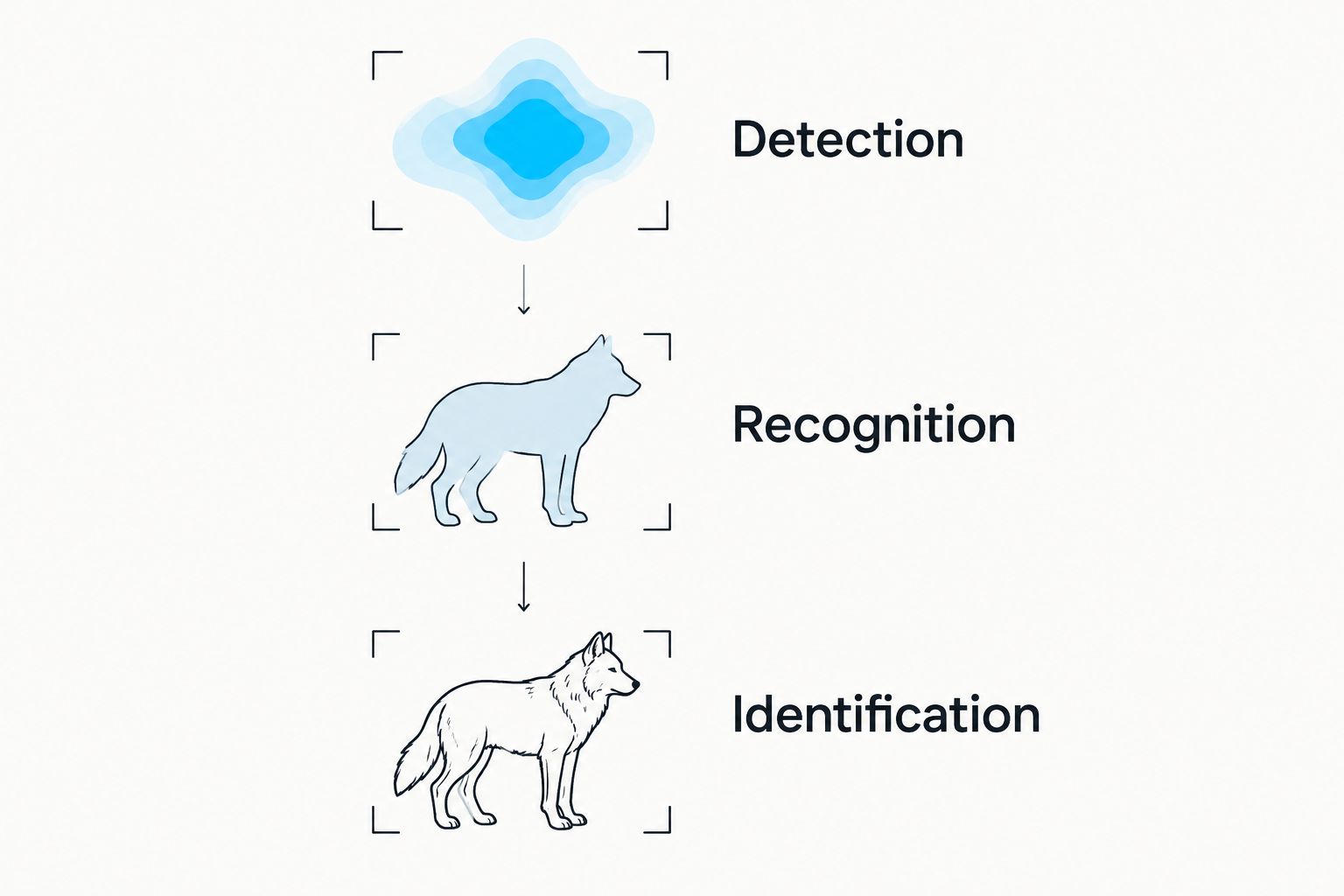
Choose the scope around the detail you need to resolve, not the furthest heat signature it can display. That principle matters more than a maximum-distance headline.
Compare the complete setup before ordering
A long range thermal scope is only one part of your equipment. Check the complete arrangement before adding accessories, because a generic mount or spare battery is not automatically suitable for a particular model.
Use this purchase checklist:
- Exact model: Match the full product name and variant, including any LRF designation.
- Mounting: Confirm the scope's mounting interface and the requirements of your existing equipment.
- Eye relief: Check the manufacturer's specification rather than assuming a familiar body shape means familiar positioning.
- Recoil rating: Confirm the rating for the exact scope and intended application.
- Power: Establish which battery arrangement the model uses and which accessories are compatible.
- Image comparison: Examine equivalent scenes at comparable magnification wherever possible.
GoingDark's product advice should resolve these questions before you order. A clear answer about fit or compatibility is more useful than adding an accessory because its description contains the word “thermal”.
Keep observation equipment separate in your comparison. A handheld thermal monocular or binocular serves a different role from a rifle scope; its sensor specification does not make it an interchangeable recommendation.
How these thermal scopes are ranked
This 2026 shortlist prioritises integrated ranging for the default recommendation, then separates an alternative LRF system from a clearly identified 384-class option. The ranking follows the criteria above: useful detail, distance measurement, field of view, physical fit and operation.
It does not claim measured differences in image quality, battery endurance or identification distance. Those comparisons require evidence for the exact models and conditions, not assumptions drawn from a product-family name.
Which long range thermal scope should you choose?
Start with the Pulsar Thermion 2 LRF XL60 if integrated ranging is central to your purchase. Compare the Nocpix ACE H50R LRF against it before deciding, with image detail and physical fit carrying more weight than secondary features.
Keep the Nocpix ACE L35 in consideration when you specifically want to assess a 384-class configuration. Do not promote it to a long-distance recommendation on digital zoom alone.
For a 2026 purchase, give GoingDark your terrain, target viewing task, mounting requirements and preference for integrated ranging. That produces a useful shortlist without pretending that “long range” means the same distance or detail requirement for every hunter.
FAQ
What's the best long range thermal scope to shortlist first?
The Pulsar Thermion 2 LRF XL60 is the first shortlist pick here for hunters prioritising integrated laser ranging. Compare its image detail, field of view and physical fit against the Nocpix ACE H50R LRF before choosing.
Is the Nocpix ACE H50R LRF better than the Pulsar Thermion 2 LRF XL60?
This shortlist does not establish an image-quality winner between the Nocpix ACE H50R LRF and Pulsar Thermion 2 LRF XL60. Compare the exact specifications, equivalent images, controls and mounting requirements rather than choosing from the LRF label alone.
Does thermal detection distance mean identification distance?
No, thermal detection distance does not mean identification distance. Detecting a heat signature requires less detail than establishing what the animal is, and conditions affect both tasks.
Does digital zoom improve thermal sensor resolution?
No, digital zoom does not increase native thermal sensor resolution. Cropping and enlargement make existing image information larger without capturing additional detail.
Do I need an integrated laser rangefinder in a thermal scope?
An integrated laser rangefinder suits buyers who want distance measurement within the scope. It answers the distance question but does not improve thermal identification detail.
Is a 384-class thermal scope enough for long-range hunting?
A 384-class label alone cannot establish whether a thermal scope meets your distant viewing needs. Assess the complete optical system, useful magnification and image detail for the intended task.
Can I compare a thermal monocular directly with a thermal rifle scope?
A thermal monocular and a thermal rifle scope serve different roles. Compare observation devices for scanning separately from rifle scopes, even when their sensor formats are similar.
One last thing
An accurate range reading beside an unclear thermal image is still an unclear thermal image. If an integrated rangefinder dominates your shortlist, return to the image comparison before placing the order: ranging and identification solve different problems.
Share:
Best thermal clip-on devices for hunters in 2026
Best 1280 resolution thermal scopes for hunting in 2026