
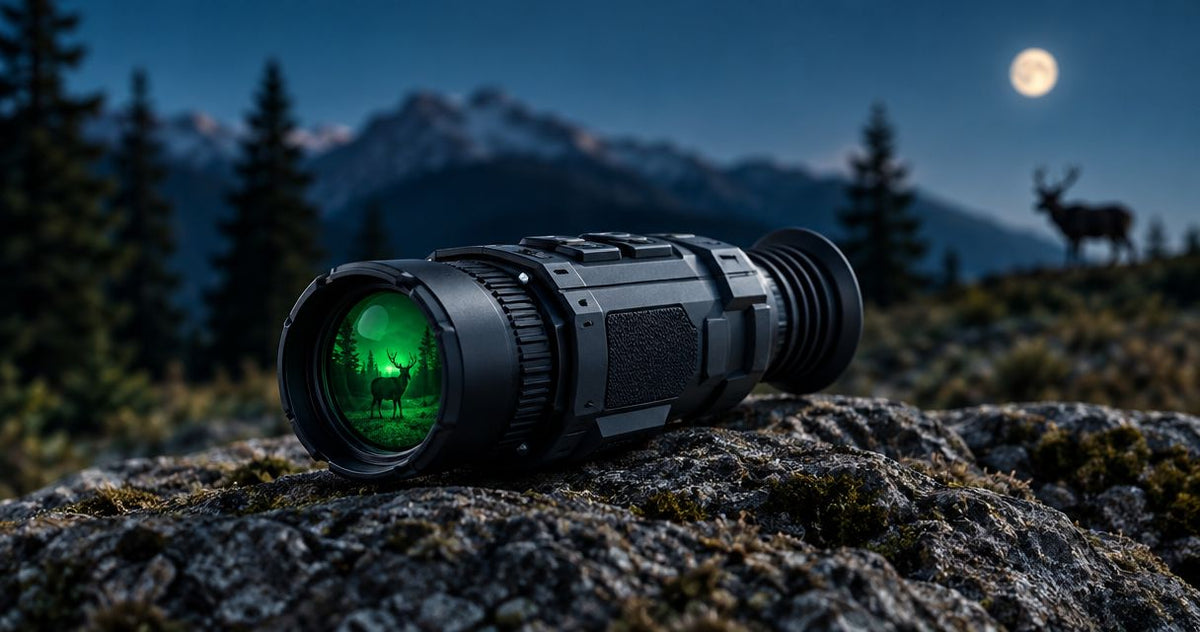
Best default shortlist: PARD Night Stalker 4K PRO 70mm LRF. Best for an illuminator combo: PARD Night Stalker 4K Mini 25mm LRF Infra-X combo. Best for a scope, torch and mount package: Pixfra Volans 4K LRF bundle. Choose your digital night vision scope for 2026 around the complete setup, not the largest number in the model name.
- PARD Night Stalker 4K PRO 70mm LRF is the default digital night vision scope shortlist for a separate-component setup.
- PARD Night Stalker 4K Mini 25mm LRF Infra-X combo suits buyers comparing a scope and illuminator together.
- Pixfra Volans 4K LRF bundle suits buyers seeking a scope, torch and cantilever QD mount package.
- GoingDark digital night vision scope advice starts with mounting, infrared illumination and usable detail—not detection claims.
Why this matters
A digital night vision scope uses a camera sensor and display to show reflected light. In darkness, compatible infrared illumination supplies light the scope can see; thermal optics instead form an image from emitted infrared radiation.
That distinction changes your buying decision. A thermal scope is not simply a digital night vision scope with a different colour palette, and a digital scope's image depends on illumination as well as its sensor, lens and display.
If you're building your first outfit, start with the digital night vision scopes first-setup guide. Decide how the scope, illuminator, mount and batteries will work together before choosing accessories separately.
What makes the best digital night vision scope?
Use these criteria to compare your 2026 shortlist. A headline resolution or objective diameter cannot answer every question about the image you'll actually use.
- Usable image detail: Compare the sensor, display and image at your intended magnification. A 4K label alone does not describe the whole viewing chain.
- Field of view: Check the published field of view and base magnification together. Finding an animal in the image matters before adding digital zoom.
- Infrared illumination: Match the illuminator's wavelength, beam adjustment and mounting arrangement to the scope and your terrain.
- Physical fit: Confirm eye relief, mounting dimensions, rail clearance and access to controls on your actual rifle.
- Power planning: Check the scope and illuminator separately. Battery format, charging arrangements and replacement procedures affect the complete setup.
- Package contents: Establish exactly which mount, illuminator and batteries the selected package includes. Similar product names do not guarantee identical contents.
Digital night vision scopes at a glance
The order below follows buying needs rather than an unsupported image-quality leaderboard. Each scope has a distinct reason to make your shortlist.
| Scope or package | Best for | Named configuration | Main trade-off |
|---|---|---|---|
| PARD Night Stalker 4K PRO 70mm LRF | Choosing scope and supporting components separately | 4K, 70mm objective, laser rangefinder | Match illumination and mounting to the exact scope configuration |
| PARD Night Stalker 4K Mini 25mm LRF Infra-X combo | Comparing a scope and illuminator as a package | 4K, 25mm objective, laser rangefinder, Infra-X illuminator combo | A combo still needs a rifle-fit and power check |
| Pixfra Volans 4K LRF bundle | Building around a scope, torch and mount package | 4K, laser rangefinder, Accura Triclops LED torch, cantilever QD mount | Included hardware must suit your rifle and intended illumination |
1. PARD Night Stalker 4K PRO: best for separate-component setups
The PARD Night Stalker 4K PRO 70mm LRF is a digital night vision scope with a laser rangefinder and a named 70mm objective. Start here when you want to choose the scope first, then match the supporting hardware to your rifle and hunting routine.
PARD Night Stalker 4K PRO is the default shortlist for hunters choosing a digital scope and supporting components separately. That recommendation concerns configuration choice, not an unverified claim that its image beats every alternative.
The 70mm objective is a concrete specification, but it does not establish identification distance. Compare base magnification and field of view before deciding whether this configuration suits close country, open paddocks or a mixture of both.
PARD Night Stalker 4K PRO pros:
- The named configuration includes a laser rangefinder.
- The 70mm objective gives you a specific lens configuration to compare against alternatives.
- A scope-first purchase lets you assess mounting and illumination as separate decisions.
PARD Night Stalker 4K PRO cons:
- A separate-component approach creates more compatibility decisions.
- The 4K and 70mm labels do not establish low-light image quality or usable magnification by themselves.
Best for: Buyers comfortable checking the complete configuration rather than choosing primarily by bundle contents.
Verdict: Buy for a separate-component setup after confirming fit, illumination and field of view.
2. PARD Night Stalker 4K Mini: best for an illuminator combo
The PARD Night Stalker 4K Mini 25mm LRF Infra-X combo pairs a digital night vision scope with an Infra-X illuminator. Its named scope configuration includes a 25mm objective and laser rangefinder.
Choose this shortlist position when you want to assess the scope and its illuminator together. That is a different buying task from choosing a standalone scope and adding an unrelated torch later.
Don't read Mini as a verified weight specification. Equally, the difference between a 25mm lens and a 70mm lens does not, on its own, establish which scope has the wider view or better image.
PARD Night Stalker 4K Mini pros:
- The listing explicitly identifies an Infra-X illuminator combo.
- The scope configuration names a laser rangefinder.
- The 25mm objective provides a clear specification for comparison.
PARD Night Stalker 4K Mini cons:
- A bundled illuminator does not settle its best mounting position on your rifle.
- Package convenience does not establish battery endurance or suitability for your terrain.
Best for: Buyers prioritising a scope-and-illuminator purchase over selecting those components independently.
Verdict: Buy for the illuminator combo, subject to checking the exact package contents and rifle fit.
3. Pixfra Volans 4K LRF: best for a scope-and-mount package
The Pixfra Volans 4K LRF package names an Accura Triclops LED torch and cantilever QD mount alongside the night vision scope. It suits a buyer who wants to assess more of the physical setup in one purchase decision.
The mount is the practical distinction here. An included mount gives you something specific to check against your rail, eye position and clearance requirements, rather than leaving mounting entirely outside the comparison.
Do not assume a torch's name confirms every illumination mode you need. Check the exact torch configuration and its suitability for the scope's night operation before choosing the package.
Pixfra Volans 4K LRF pros:
- The package explicitly names a cantilever QD mount.
- The scope configuration includes a laser rangefinder.
- The named torch makes illumination part of the package assessment.
Pixfra Volans 4K LRF cons:
- The supplied mount still needs to match your rifle's mounting requirements.
- A QD mount does not remove the need to verify zero after fitting or refitting.
Best for: Buyers comparing a scope, torch and mount package rather than a scope alone.
Verdict: Buy for package completeness only after checking the mount and torch configuration.
Match illumination before adding more magnification
For a 2026 digital night vision setup, treat illumination as part of the imaging system. More digital zoom cannot recover detail that the sensor never captured, and excessive foreground reflection can make the useful part of the scene harder to read.
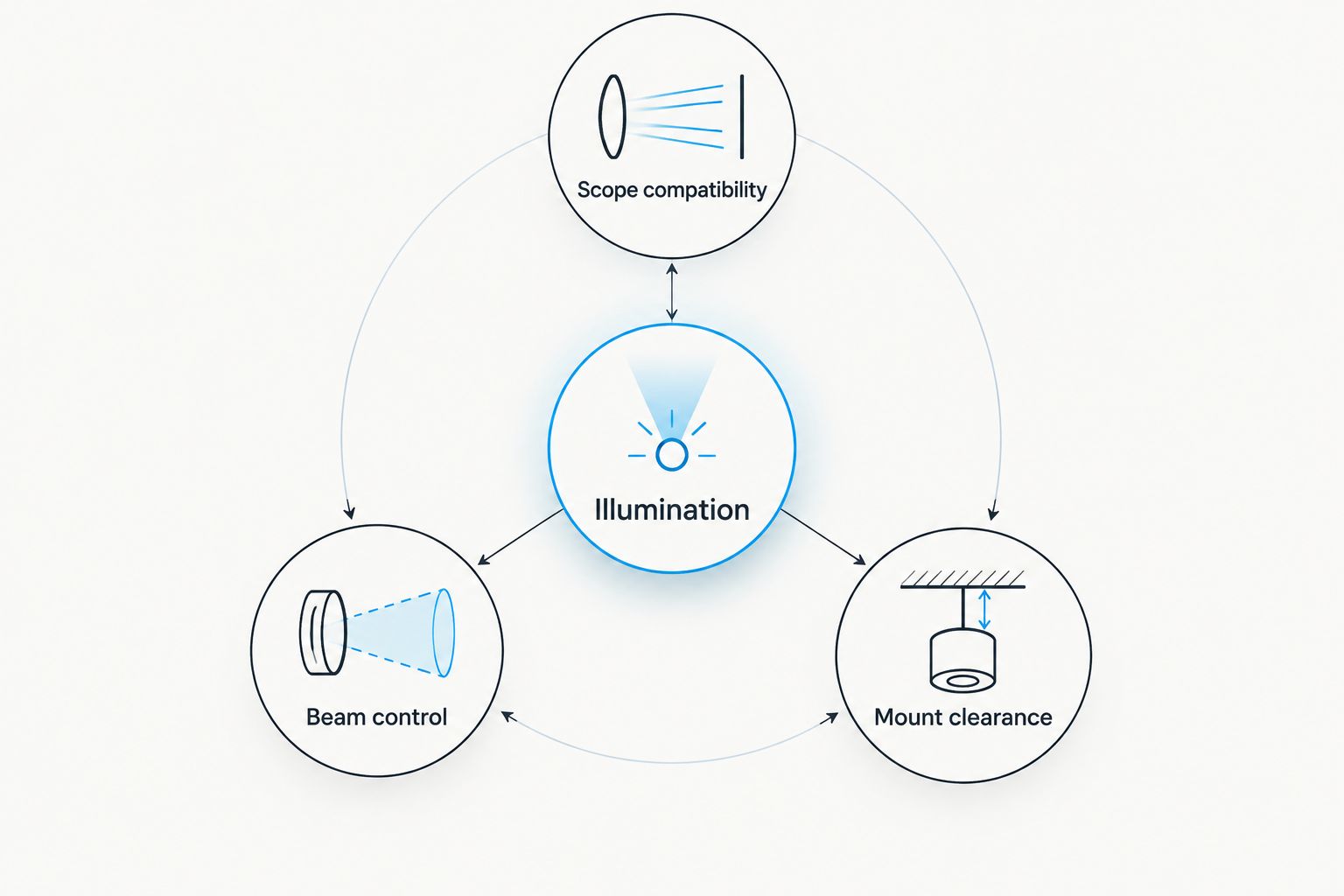
Scope compatibility, Beam control and Mount clearance are the practical checks. Confirm the supported wavelength, choose an adjustable beam suited to your view, and position the illuminator so the rifle or nearby vegetation does not dominate the reflection.
The Z-Vision DN-303 names red, white and 850nm IR modes. The Z-Vision NV-303 names red, 850nm IR and 940nm IR modes; compare these as illumination options, not as evidence that either will produce a particular identification distance.
| Illuminator | Best for | Practical advantage | Trade-off |
|---|---|---|---|
| Z-Vision DN-303 | Buyers needing white light alongside red and IR | Names white, red and 850nm IR modes | Its named modes do not include 940nm IR |
| Z-Vision NV-303 | Buyers comparing infrared wavelengths | Names both 850nm and 940nm IR modes | Its named modes do not include white light |
These are supporting accessories, not substitutes for a scope. Check scope compatibility and the exact mounting arrangement before adding either to your setup.


Check the complete setup before ordering
Give GoingDark your rifle's mounting details, your intended terrain and the way you plan to carry the outfit. Those details make digital night vision scope comparisons more useful than asking which model has the biggest headline specification.
- Mounting: Check ring or mount requirements, rail compatibility, objective clearance and access to the bolt and controls.
- Eye position: Confirm eye relief and adjustment range from your normal shooting position.
- Power: Identify the scope battery and illuminator battery separately, including how each is charged or replaced.
- Operation: Check focus controls, rangefinder operation and any recording functions you intend to use.
If you're replacing an existing optic in 2026, don't assume the old mount or batteries transfer. Confirm compatibility for the exact new model before building your accessory list.
How the shortlist is ranked
This GoingDark digital night vision scope shortlist ranks the named configurations by buying task: separate components, an illuminator combo, and a broader mounting package. It does not claim comparative field testing or measured image-quality results.
The criteria remain usable detail, field of view, illumination, physical fit, power and package contents. Keep those checks attached to the exact model when comparing alternatives in 2026.
Which digital night vision scope should you choose?
Start with PARD Night Stalker 4K PRO 70mm LRF if you want to choose supporting components separately. Choose PARD Night Stalker 4K Mini 25mm LRF Infra-X combo when the illuminator package is your priority, or Pixfra Volans 4K LRF when you want to assess the supplied torch and mount together.
A laser rangefinder gives you distance information; it does not identify an animal or confirm a safe background. Keep ranging, identification and the decision to shoot as separate checks.
FAQ
What's the best digital night vision scope for my first setup?
The best first digital night vision scope is one that fits your rifle and has a confirmed illumination and power plan. PARD Night Stalker 4K Mini 25mm LRF Infra-X combo is a relevant shortlist option when you want to compare the scope and illuminator together.
Is a digital night vision scope the same as a thermal scope?
No. Digital night vision forms an image from reflected light, including compatible infrared illumination, while thermal imaging uses emitted infrared radiation. Compare them as different technologies rather than interchangeable specifications.
Does a 4K night vision scope guarantee a clearer image?
No, a 4K label alone does not guarantee a clearer usable image. Lens performance, illumination, focus, processing, display and digital magnification all affect what you see.
Is a 70mm objective better than a 25mm objective?
Objective diameter alone does not establish which scope is better for your hunting. Compare base magnification, field of view, physical fit and the complete imaging system before choosing.
Do I need an IR illuminator for digital night vision?
You need compatible illumination when ambient light is insufficient for the image you require. Check the scope's supported wavelength and whether the selected package includes a suitable illuminator.
Does a laser rangefinder tell me whether I can identify an animal?
No, a laser rangefinder measures distance rather than identification quality. You still need enough image detail to positively identify the animal and assess the background.
Can I trust a quick-detach mount without checking zero?
Verify zero after fitting or refitting the scope. A quick-detach mechanism is a mounting feature, not a substitute for confirming the complete rifle-and-optic setup.
One last thing
Set the eyepiece for a sharp reticle before judging the scene image. Then focus the scene and adjust illumination; otherwise, you risk blaming the scope's resolution for a focus or lighting problem.
For your 2026 purchase, take GoingDark a complete setup question—not just a model name. Mounting, illumination and power are buying decisions, not afterthoughts.
Share:
Best night vision goggles for hunting in Australia 2026
Best thermal binoculars for hunting in 2026